
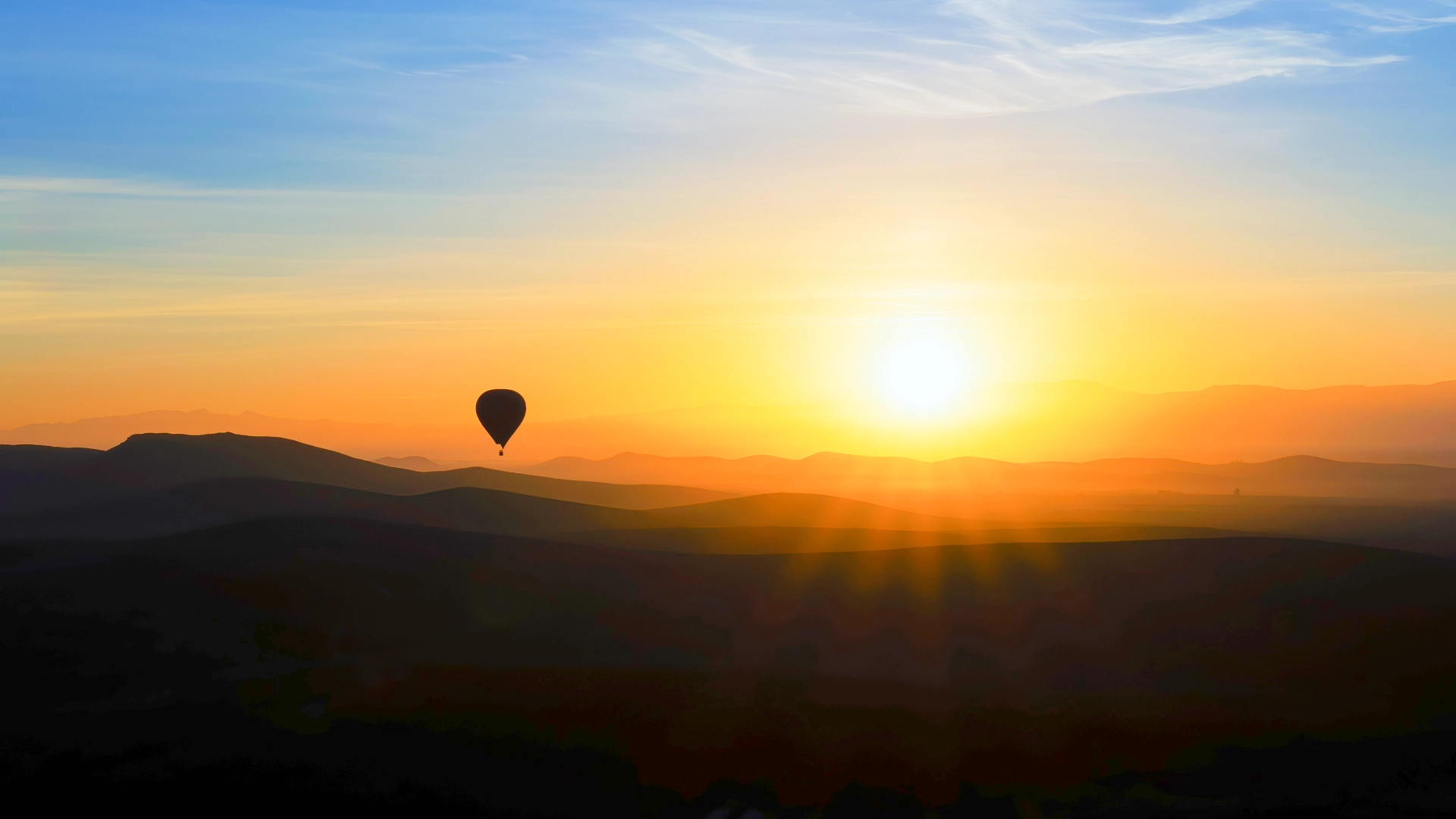
An eleven-day private journey south from Marrakech through saffron country, the Draa, Erg Chebbi and the kasbah road.
The days below show how this journey is intended to flow. Each one can be adjusted once we start planning together.
The city is the doorway, not the destination.
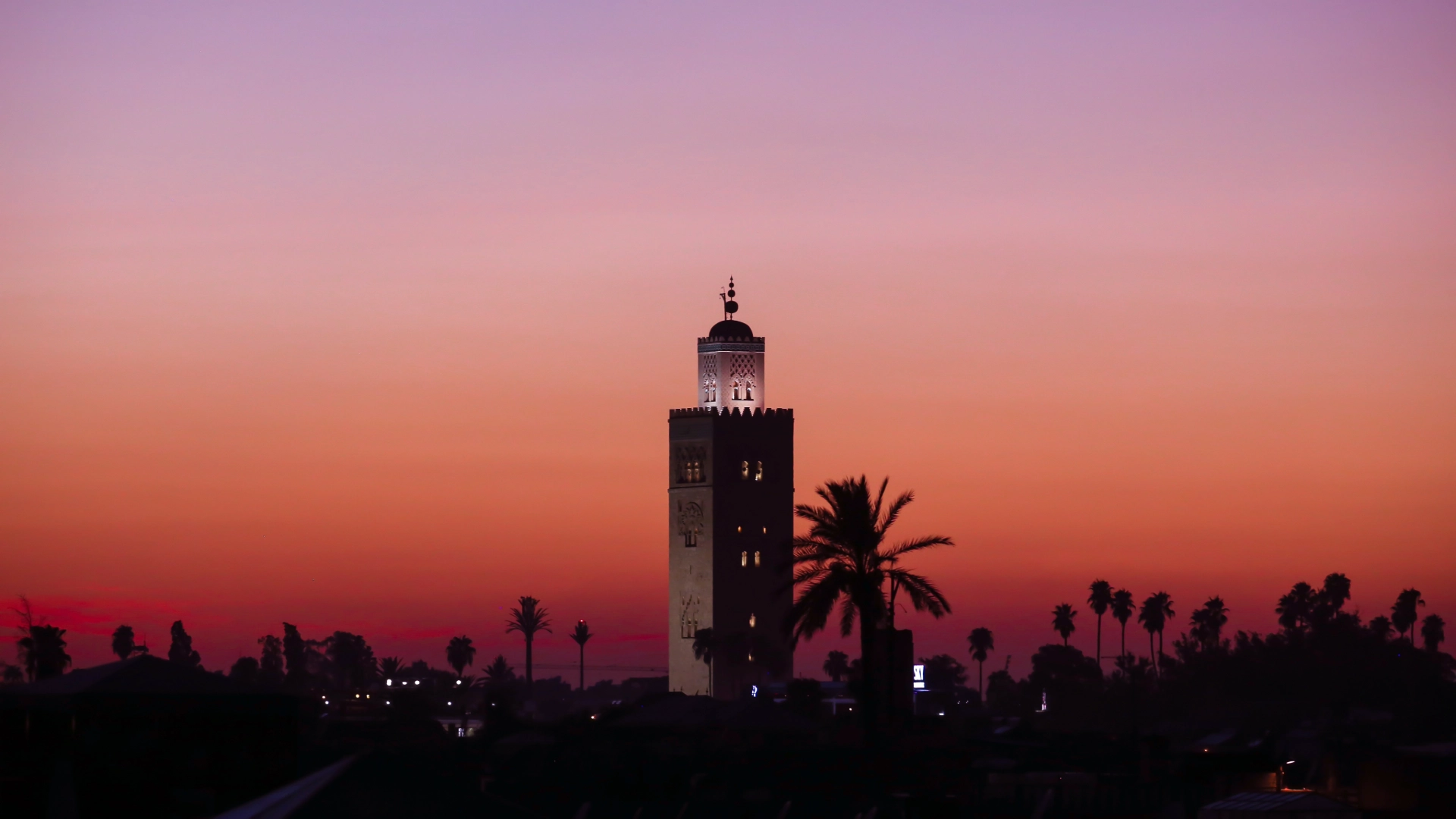
A driver waiting, a riad behind an unmarked door, and one rooftop evening before the road turns south.
A driver is waiting when you come out, and the city arrives quickly after that: walls the colour of dust, mopeds, the particular density of Marrakech in the late afternoon.
The riad gives nothing away from the lane. Inside it there is a courtyard, and the noise drops by half.
Dinner is on a roof above the medina, the Koutoubia holding the last of the light. Tomorrow the road turns south and does not come back for a week. Tonight there is nothing to do but sit above a city you have barely met.
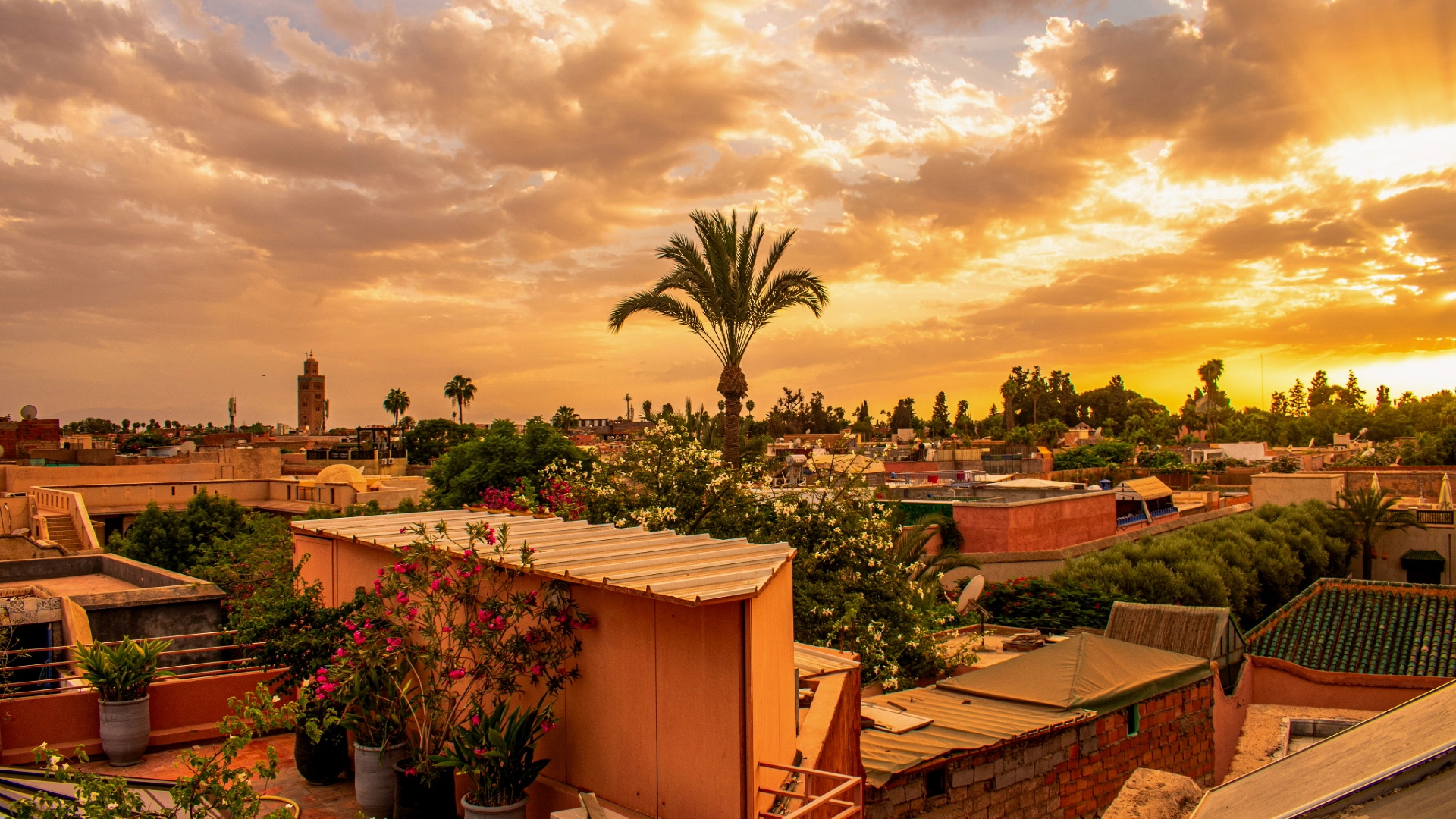
The plain gives way to hill country, and the south introduces itself through what it grows and what it weaves.
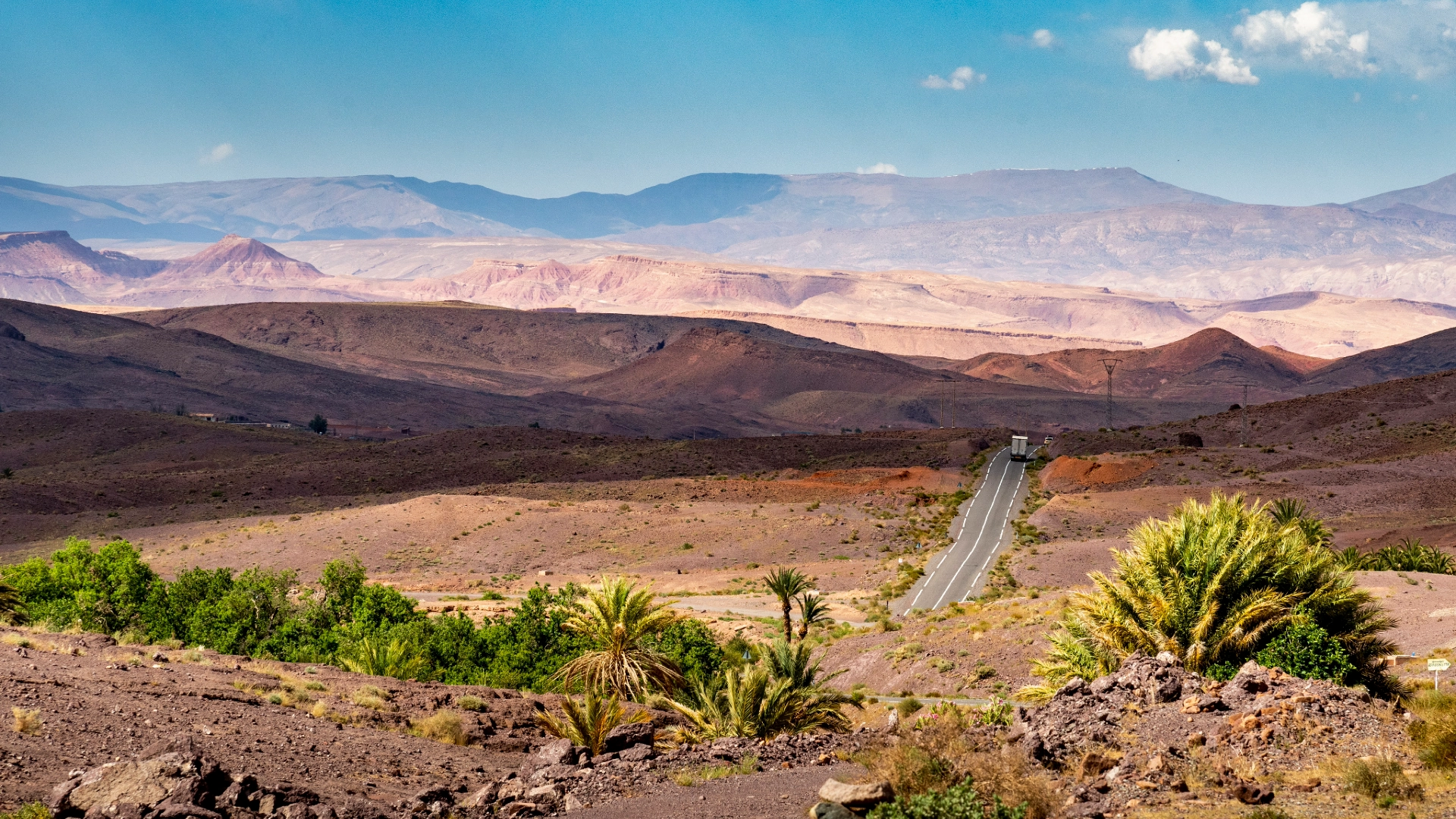
Kasbah Tiout's palm grove, the long plain south, and the walls of Taroudant by evening.
Marrakech ends abruptly. Within an hour the plain has taken over, flat and pale, the Anti-Atlas gathering along the southern edge of it.
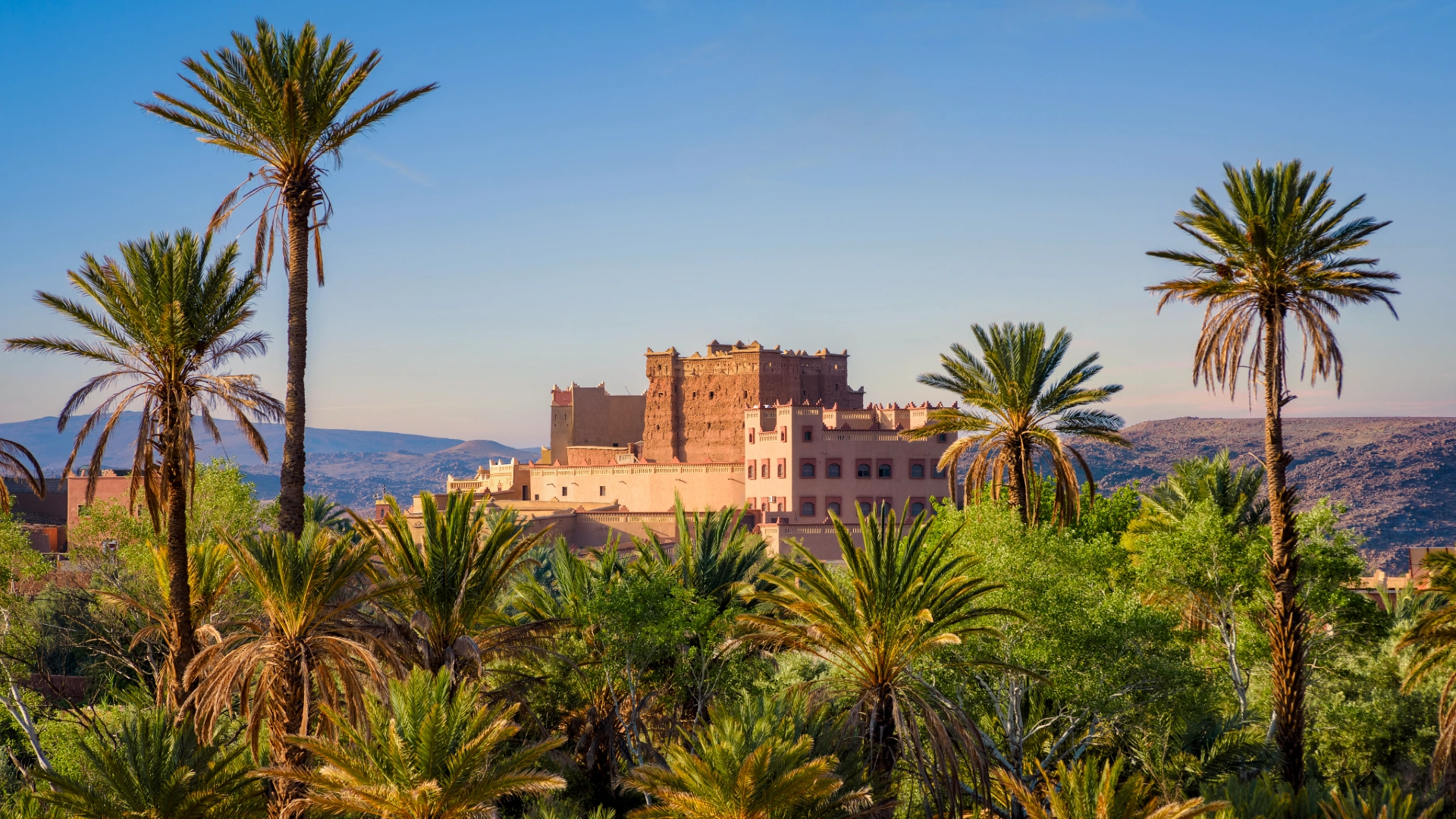
Kasbah Tiout stands above a palm grove planted with orange and pomegranate. Walking through it is the first indication that the south keeps its water close and builds around it.
Where visits allow, the Claudio Bravo Palace follows. By evening the ramparts of Taroudant appear, a working town inside its walls, unbothered by your arrival.
Saffron terraces above Taliouine, a weaving workshop at Tazenakht, and the descent toward Zagora.
Taliouine grows saffron on terraces at altitude, and the farm makes the economics plain: the flowers open for a few weeks, the stigmas are lifted by hand at first light, and it takes an implausible number of them to fill a single jar. Where the site supports it, Kasbah Taliouine stands nearby.
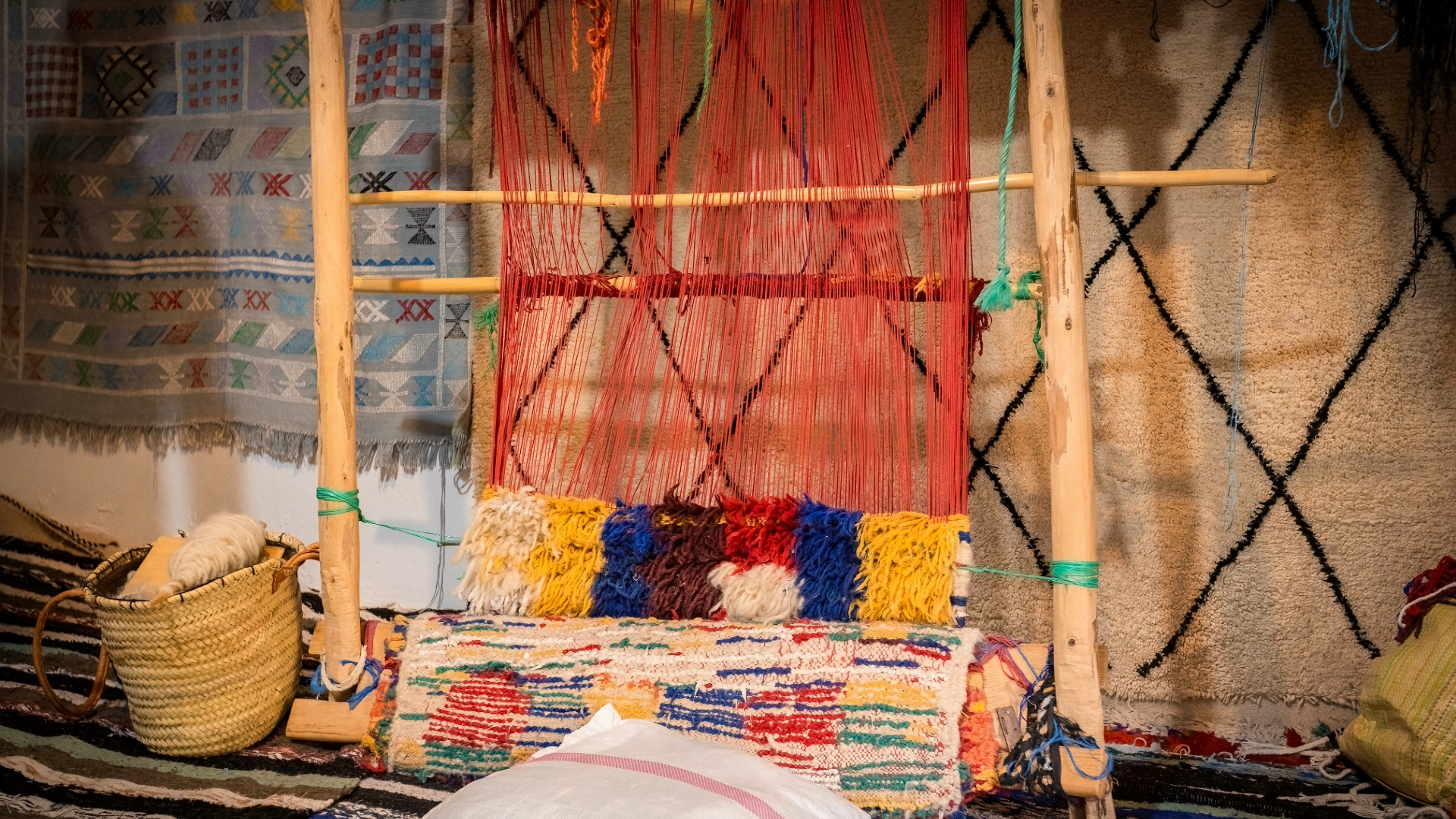
Tazenakht works in wool instead. The looms are upright, the patterns are carried in the weaver's head rather than on paper, and the workshop is a place of employment before it is anything else.
The road falls through the afternoon toward Zagora, and the vegetation thins with every hour of it.
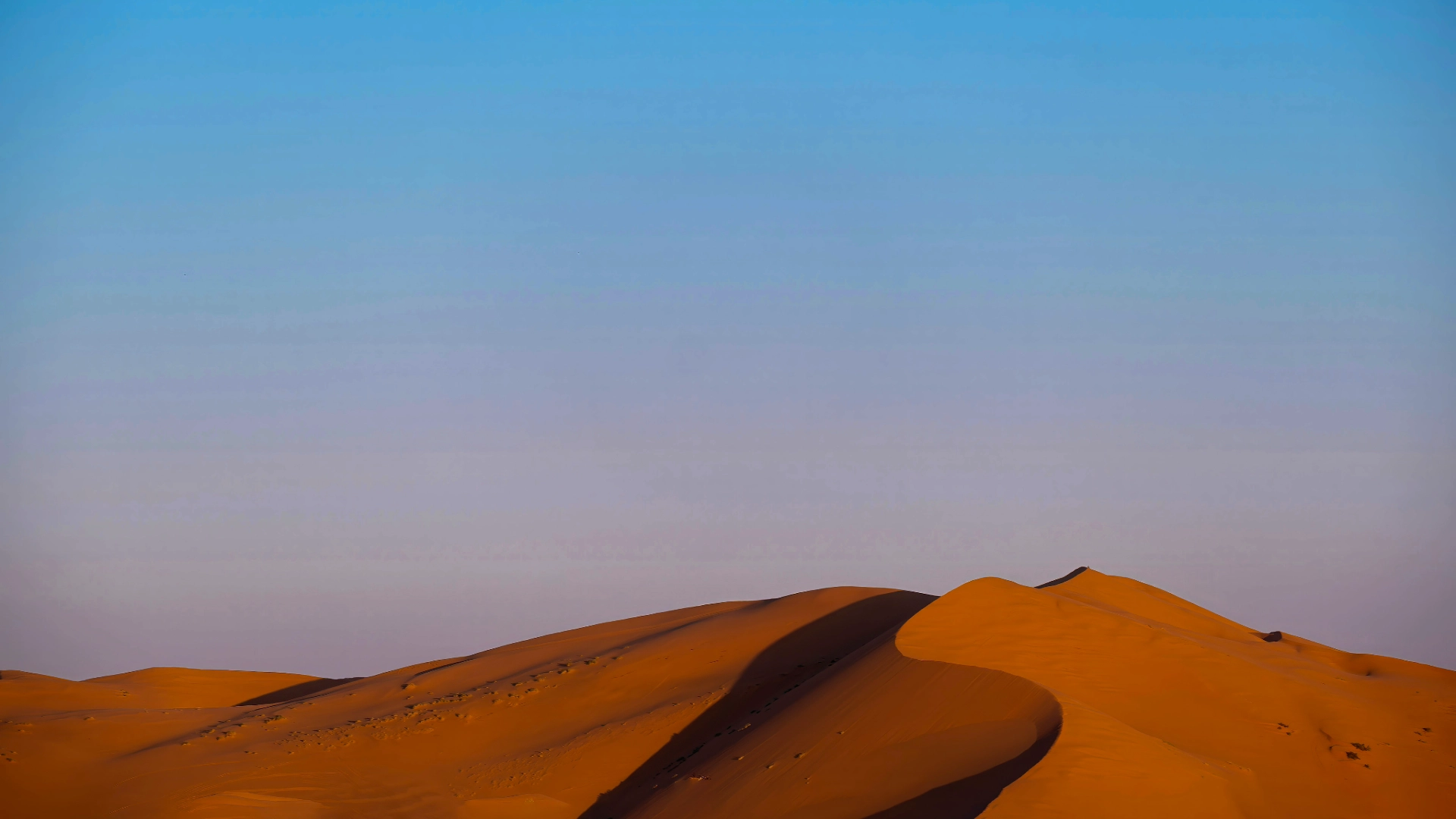
The road runs out of things to pass, and then the dunes are simply there.
Tamegroute's green pottery, then a genuinely long drive east until the dunes appear.
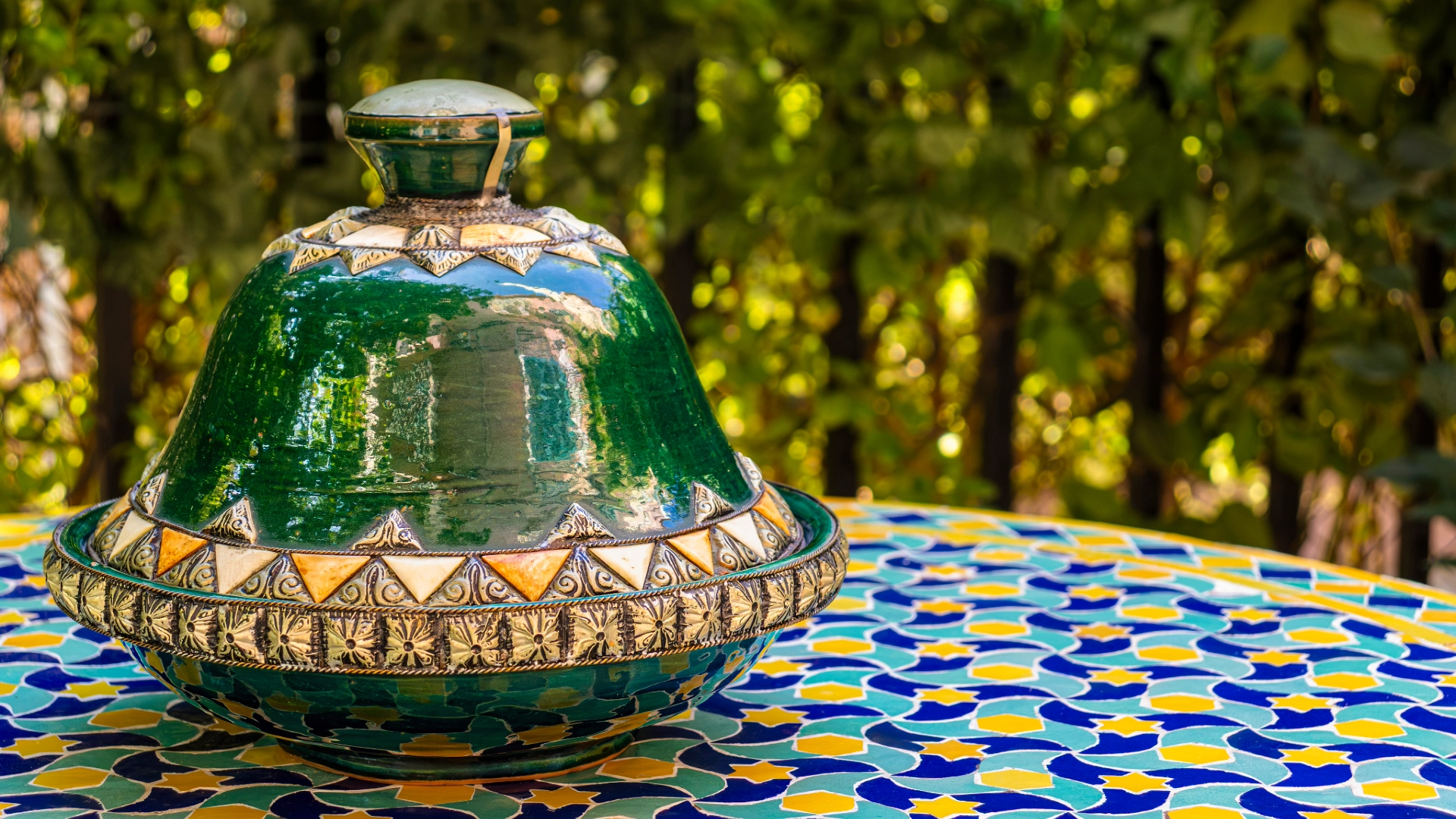
Tamegroute fires its pottery to a green that belongs to this town and nowhere else, the glaze mixed from local mineral and fired in kilns dug into the ground. Where it is supported, the Zaouia Naciria and its library stand nearby.
Then the day becomes the drive. This is the longest stretch of the journey and there is no honest way to shorten it: east, through country that empties as it goes, stone and hammada and very little for hours.
Erg Chebbi does not build gradually. It arrives, orange and abrupt, out of flat ground. If the timing holds after that much road, camels carry you the last part of the way in.
Khamlia's Gnawa tradition, Rissani's market, and a day with nowhere it needs to be.
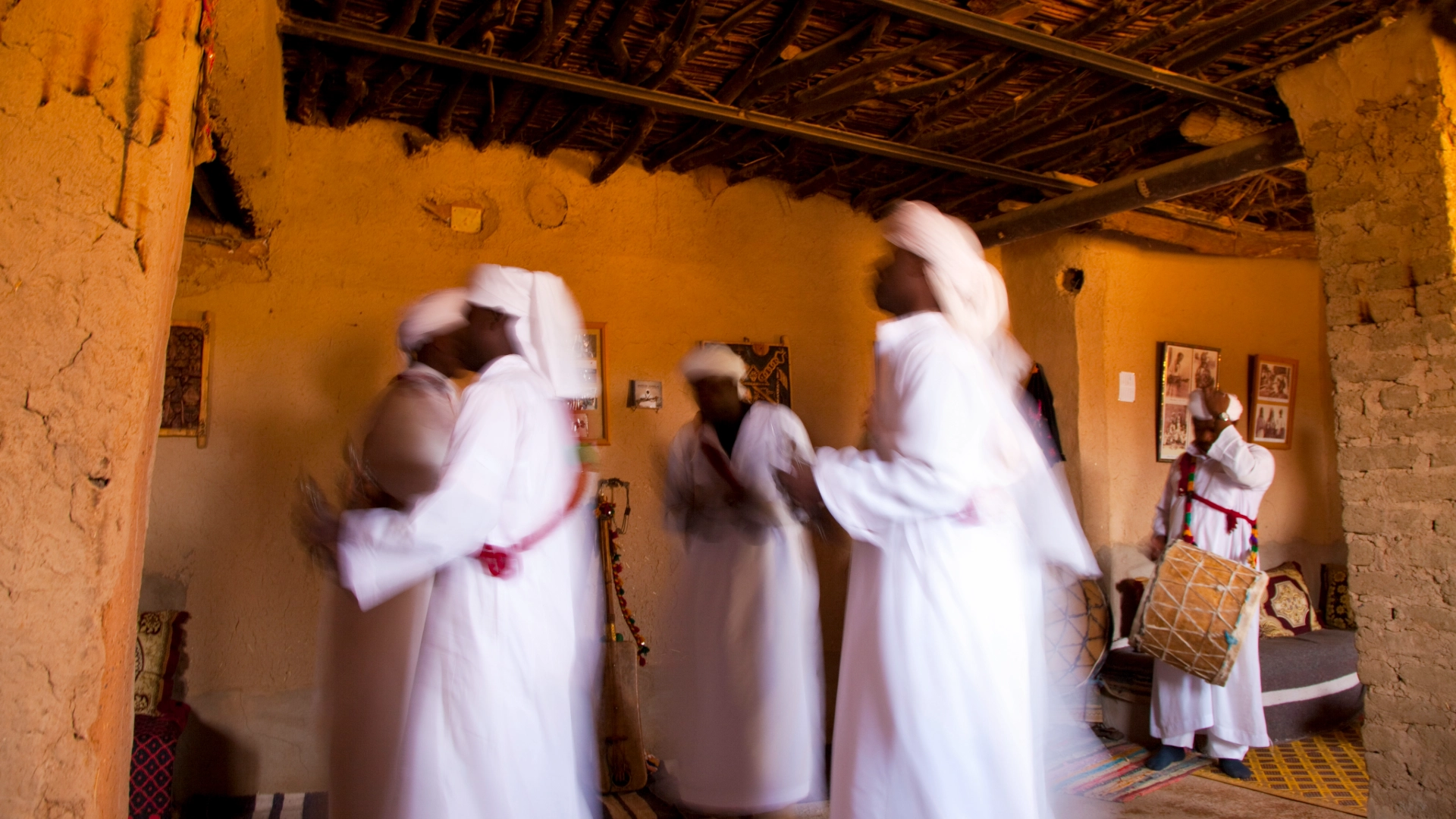
Khamlia's music came north with the trans-Saharan trade and stayed. It is played here as a living practice rather than a scheduled performance, and the difference is audible.
Rissani keeps a kasbah and a market. Where a visit can be genuinely arranged rather than staged, there is tea with a nomadic family. Dayet Srji holds water in some seasons and not others; the flamingos come with it, or they do not.
The rest of the day belongs to the dunes. Nothing is scheduled against them.
Earth architecture, valleys and water: the corridor this journey takes its name from.
The khettara at Fezna, and the road west into the palm groves of Skoura.
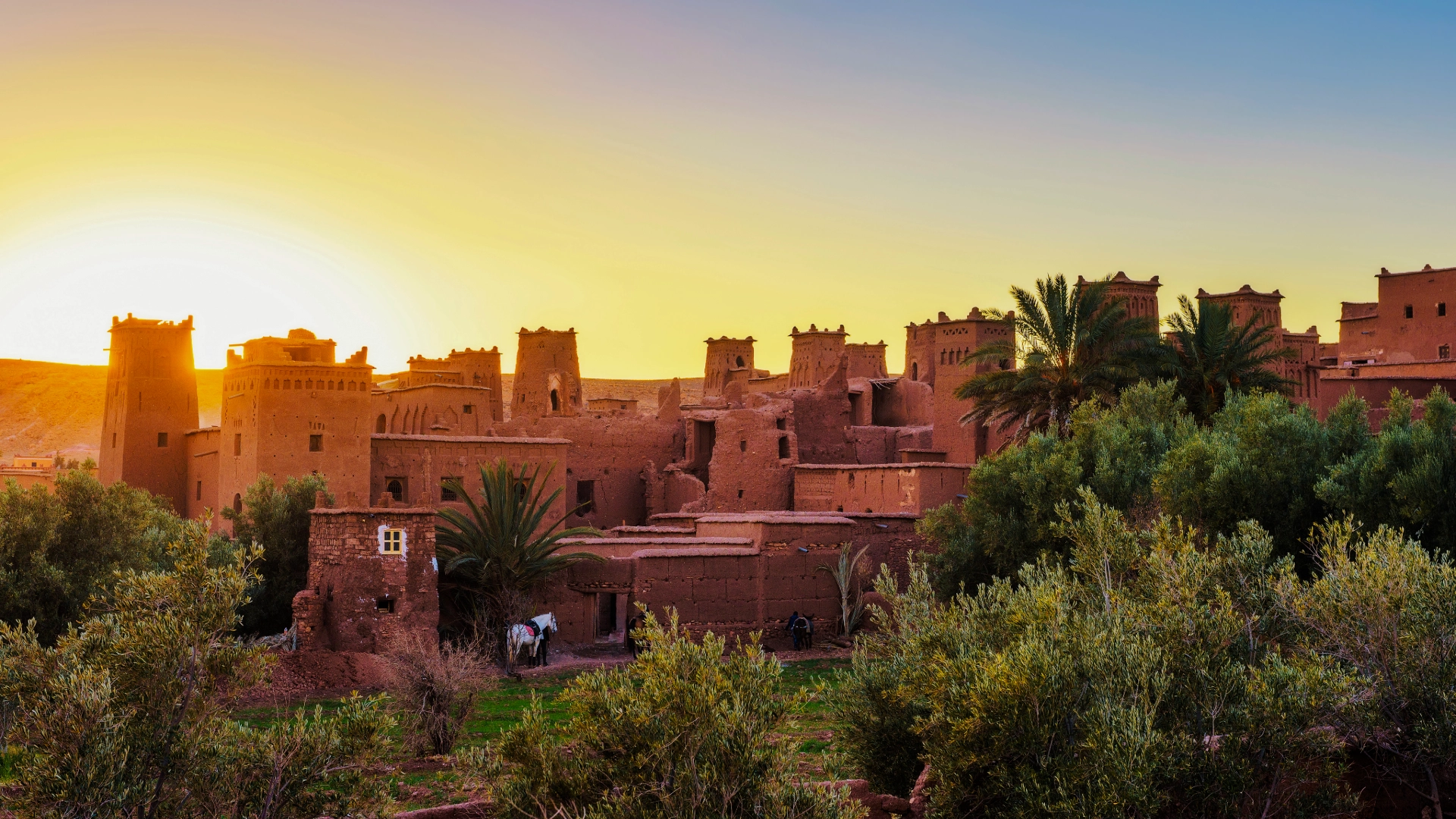
At Fezna the ground is punctuated by a line of shafts running toward the horizon. Below them is a khettara, a gravity-fed channel that has moved water beneath the desert for centuries and still does, maintained by the people it waters.
The land begins to close again after that. Where access allows, the region's land-art works stand out in the open plain, deliberately far from anything.
By evening Skoura arrives as a palm grove rather than a town, kasbahs held inside it, water audible again after two days without it.
The longest touring day: Aït Ben Haddou, the Todra Gorges and the Valley of Roses.
Kasbah Taourirt in Ouarzazate shows what earth can do when it is built well: rammed walls, cool rooms, corners rounded by weather rather than by design.
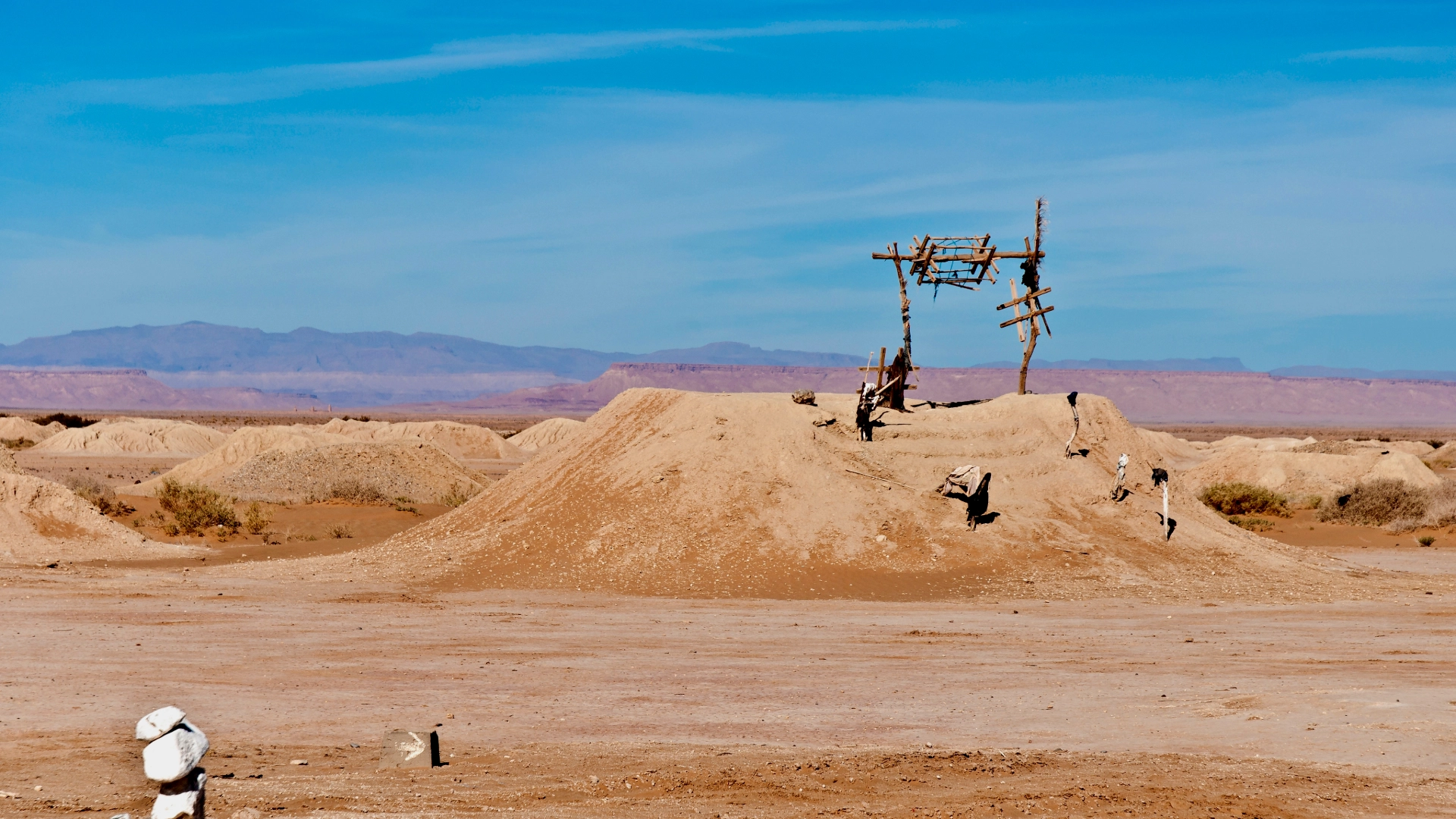
Aït Ben Haddou is the version everyone recognises, and it earns it. The ksar is stacked against its hill and still holds a small resident population alongside everyone who comes to look at it.
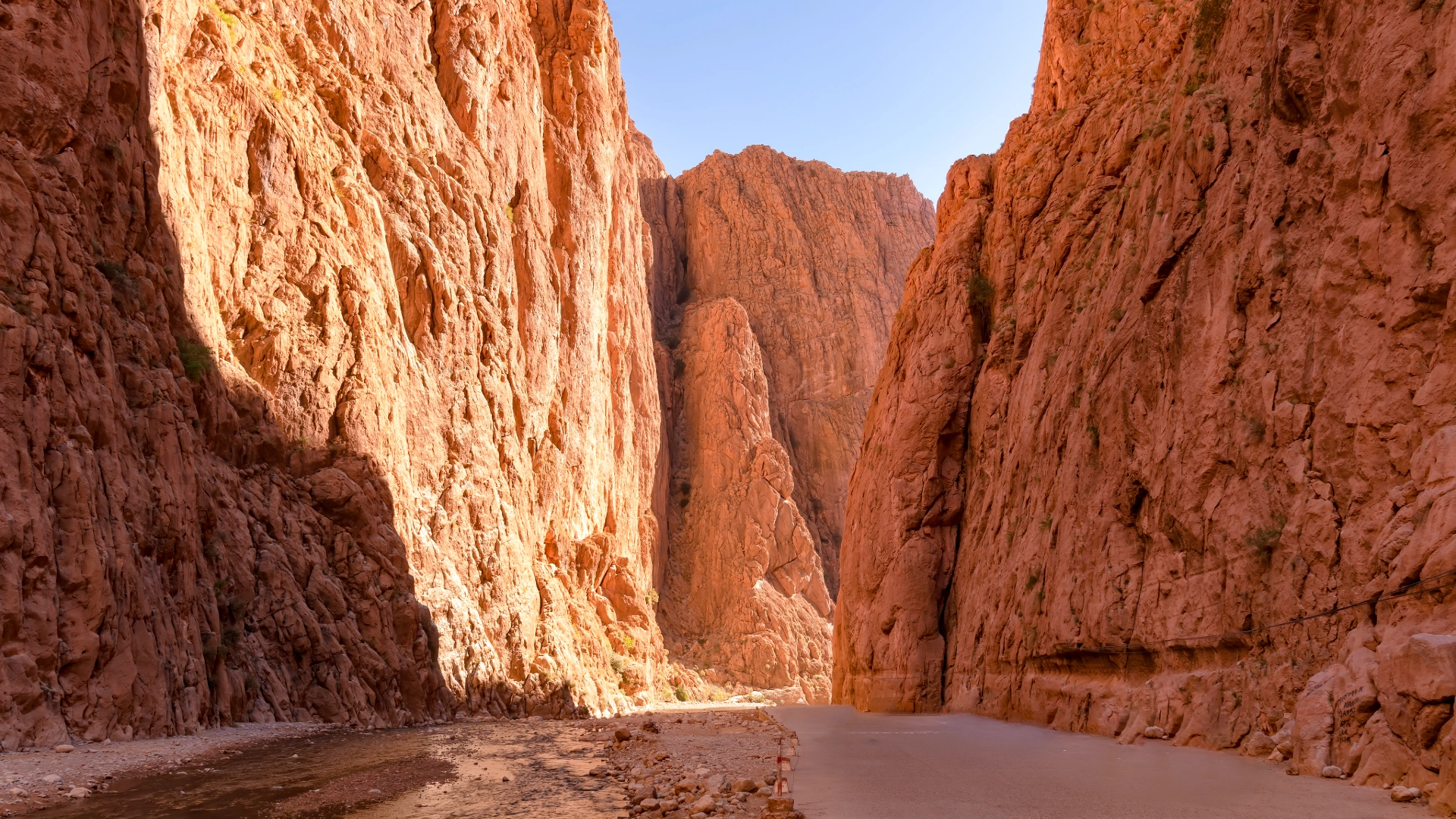
The Todra Gorges narrow to a corridor of limestone with a road and a river sharing the floor. At Kelaat M'Gouna the valley grows roses in commercial quantity, cut for distillation each spring.
It is a long day and it is planned as one. The distance is the substance of it rather than the cost.
The same walls, approached from the other side of the country.
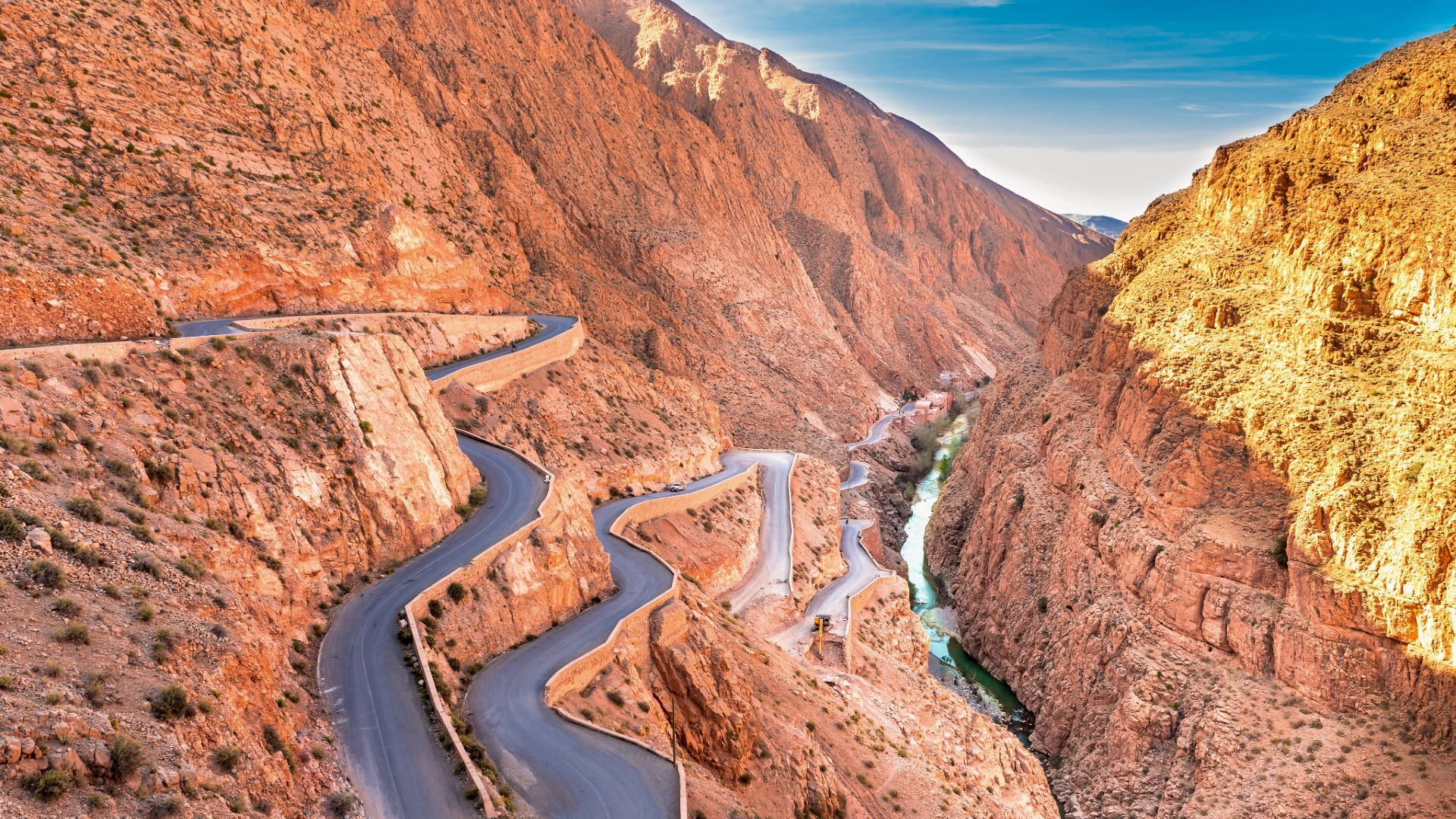
Kasbah Telouet and the Tizi n'Tichka, crossing the Atlas back toward the city.
Where visits allow, Ouarzazate's film studios sit at the edge of town, an industry the region built for itself out of light and empty landscape.
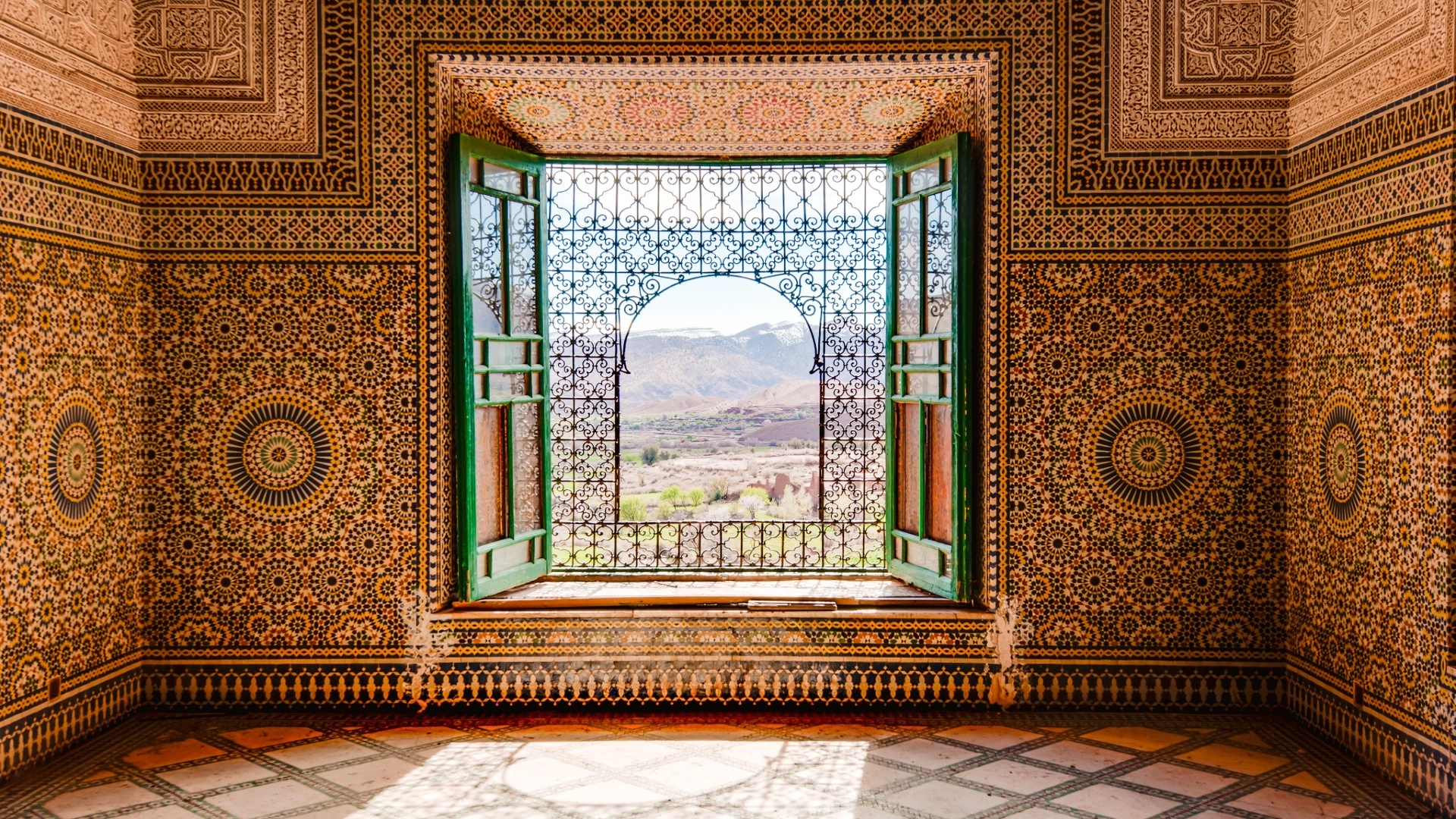
Telouet is the more interesting building. It was the seat of the Glaoui, who held this pass and therefore the trade that crossed it, and the interior still carries the decoration of that authority even as the structure gives way around it.
Then the Tizi n'Tichka: over two thousand metres, switchback after switchback, the south dropping away behind. Marrakech is on the other side, and arriving from this direction it reads differently than it did on the first evening.
The Saadian Tombs and the city palaces, and an evening that moves by carriage.
Marrakech is easier now. Ten days of southern towns have recalibrated what counts as large, and the medina reads as a city rather than an assault.
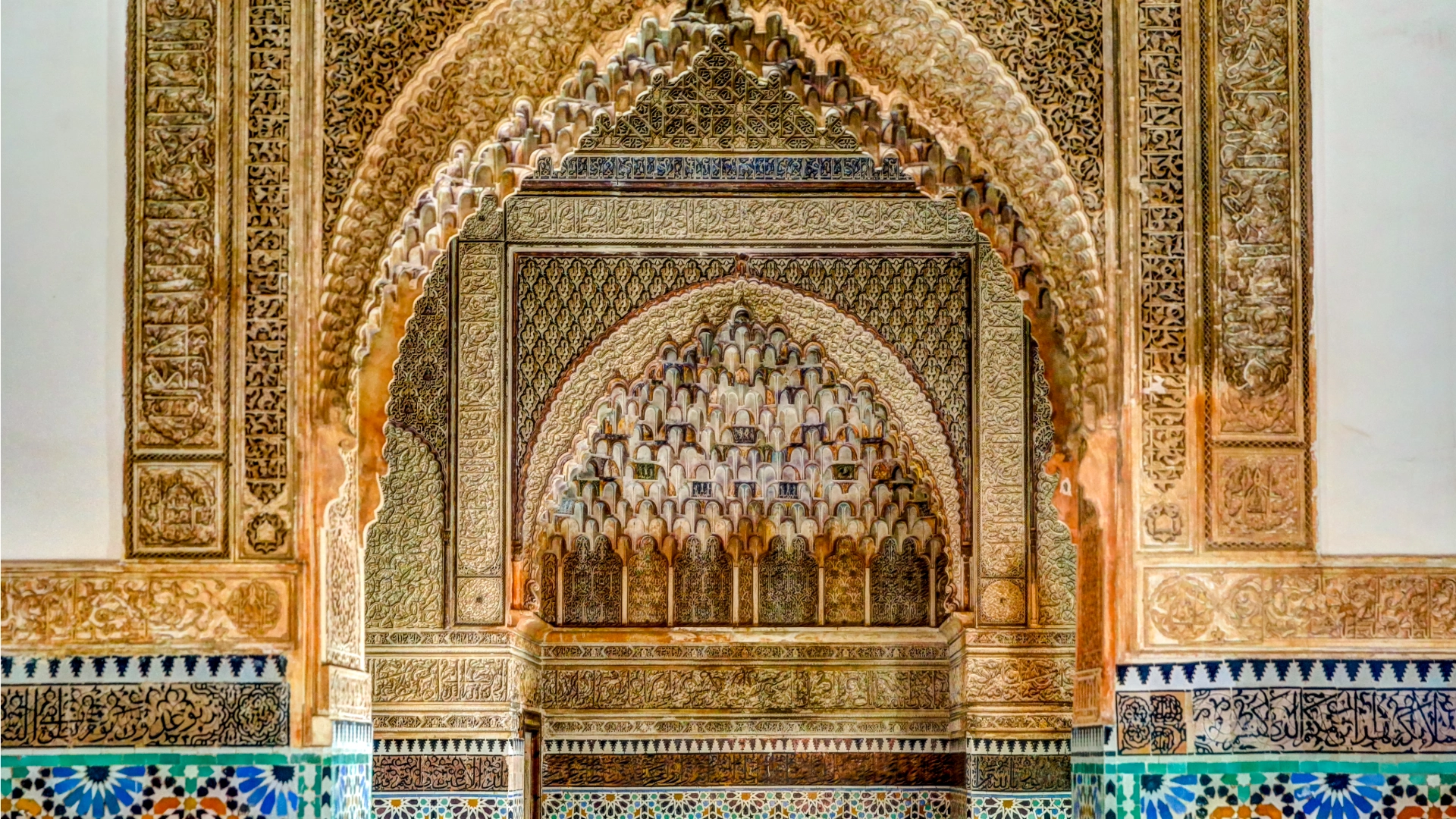
The Saadian Tombs were sealed for centuries and reopened only in the last hundred years, which is much of the reason the cedar and the tilework survived as well as they did. The palaces nearby were built to impress and still manage it.
Where the evening can be arranged that way, a horse-drawn carriage crosses the city to dinner, and Gnawa is played live: the same tradition heard at Khamlia, carried here along the routes you have just driven.
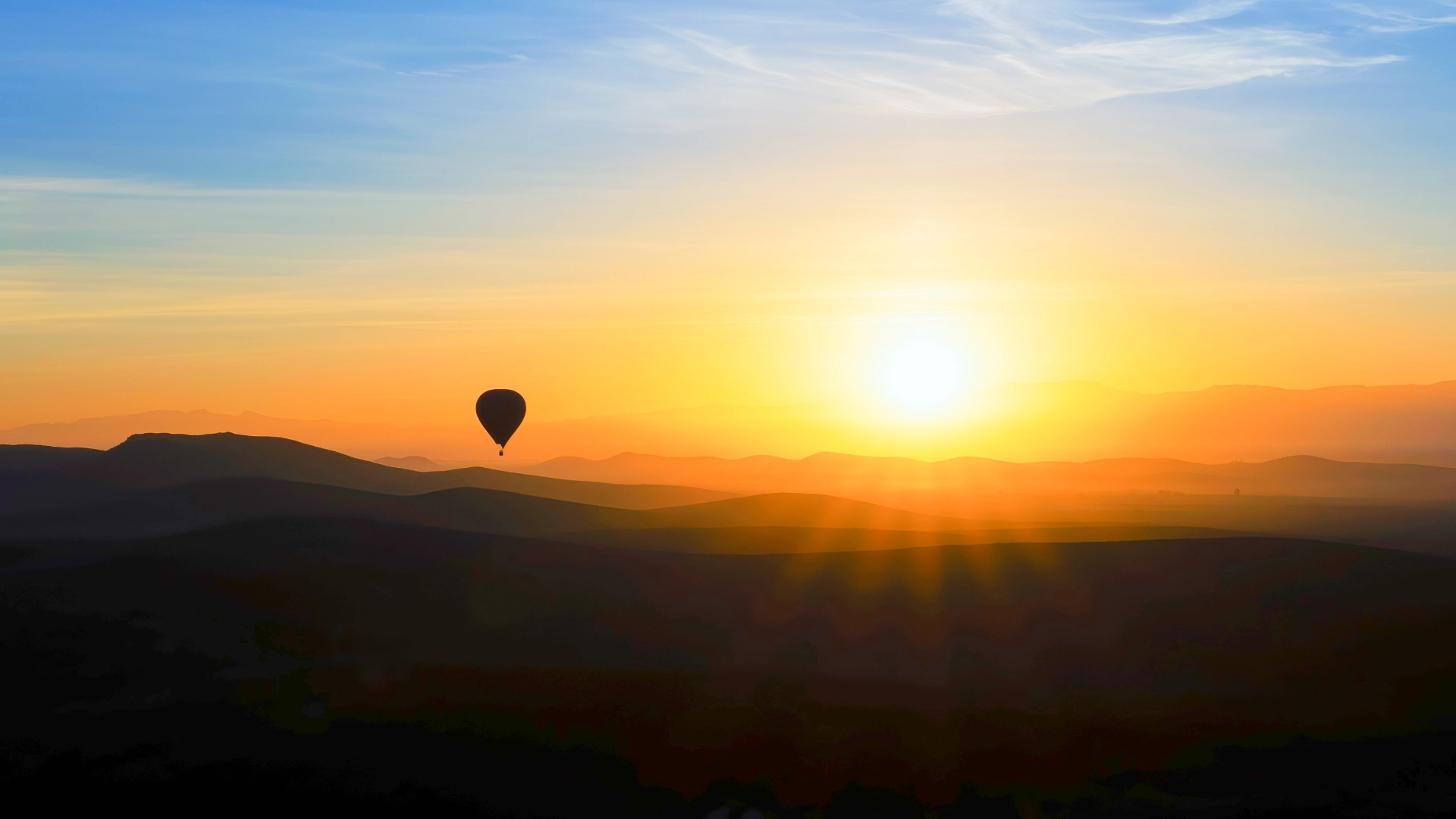
A balloon at first light where conditions allow, Majorelle, a cooking class and a hammam.
If the wind cooperates, the day starts before it is properly light, lifting over the plain south of the city with the Atlas laid along the horizon you crossed two days ago. Conditions decide this, not planning.
Majorelle follows. The cobalt is Jacques Majorelle's own mix, later kept by Yves Saint Laurent, whose museum stands beside the garden.
The afternoon goes to the souk and then to a kitchen, buying and then cooking what was bought. The evening ends in a hammam, which is the correct way to finish eleven days of road.
An unhurried last morning, and a final private drive to close the loop.
The morning is left open. Nothing is programmed into it, which is deliberate.
Eleven days ago Marrakech was the start of something you had not seen yet. It is now the far end of a loop that ran south through saffron country and the Draa, out to Erg Chebbi, back along the kasbah road and over the Atlas.
A driver takes you the last stretch. The road that carried the whole journey does one more short piece of work.
You return to the same walls you left, having crossed saffron terraces, a river valley, a sand sea and a mountain pass to get back to them.
The city has not changed. The distance between the first evening and the last is what the journey was actually made of.