Wellbeing in Morocco is rarely something added to a journey. More often it is already there, in how the days are paced: fewer transitions, better mornings, and enough space between one place and the next.
A journey can be restorative without being organised as a retreat. Sometimes the difference is simply fewer transitions, mornings that are not rushed, and afternoons left without a fixed plan. The places that let the body slow down on their own terms usually do more than any single treatment could.
This is not a list of spas or wellness hotels. It is an account of where wellbeing already lives inside a Morocco journey, and how KaMabia shapes journeys around it rather than beside it.
The hammam is not a spa treatment invented for visitors. It is a neighbourhood institution, built into how Moroccans have washed and gathered for centuries, long before the word wellness existed to describe any of it. Steam fills a tiled room, water is poured by the bucket rather than the tap, and skin is worked with a rough glove until it genuinely changes texture.
Every town has its own version, and the range is real: a simple neighbourhood hammam used daily by people who live nearby, and quieter, more private interpretations found in riads and select houses, where the same heat and water are offered without the crowd. Neither is more authentic than the other. Both are the same practice, adjusted for who is in the room.
What stays constant is the effect: heat that works into the body before anything else happens, and a kind of unhurried physical care that has nothing to do with luxury branding and everything to do with a tradition that simply works.
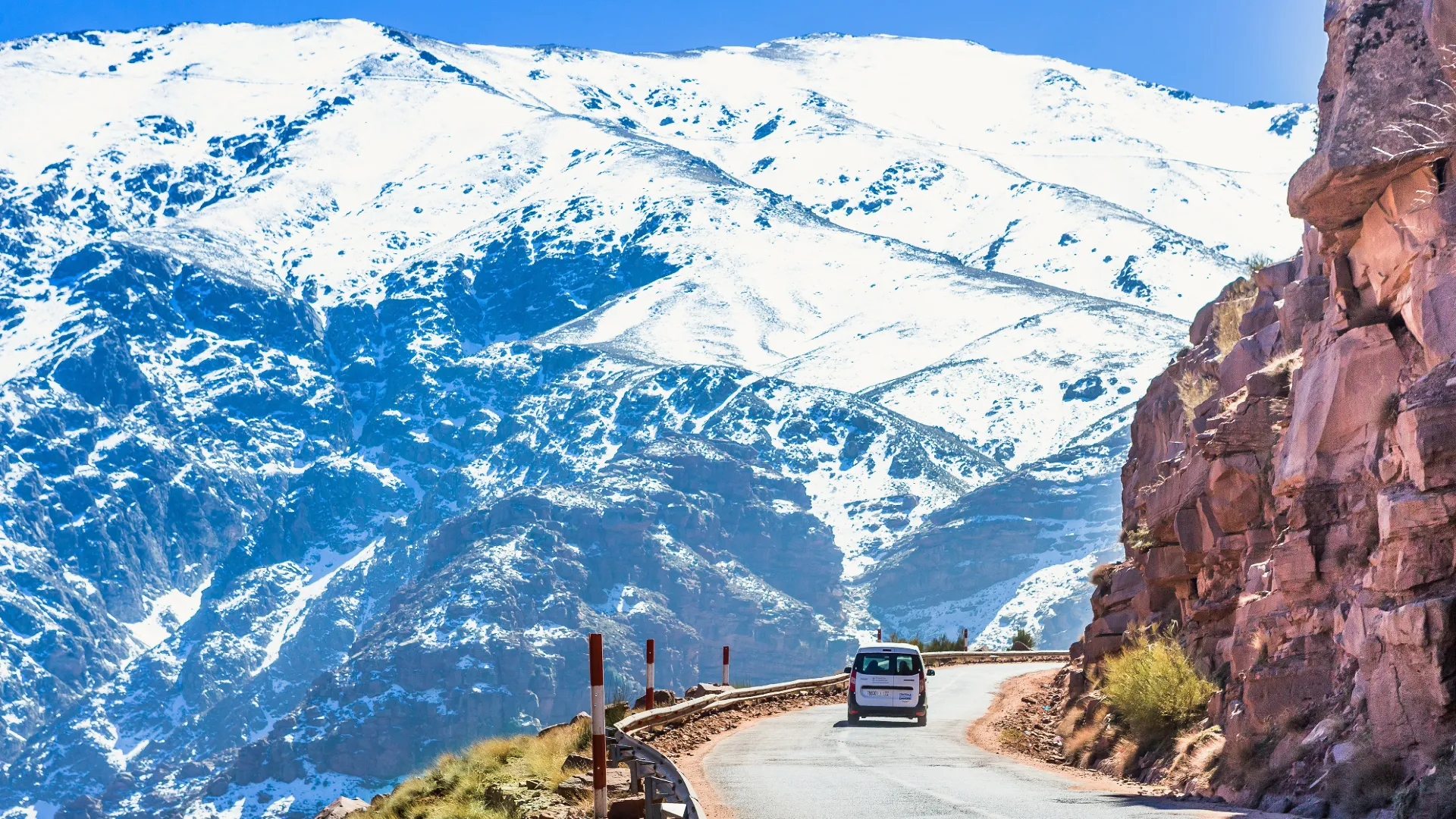
The High Atlas begins within an hour of Marrakech, and the change is immediate. The air cools, the light sharpens, and a walk that would be unthinkable in the city's heat becomes the natural shape of a morning.
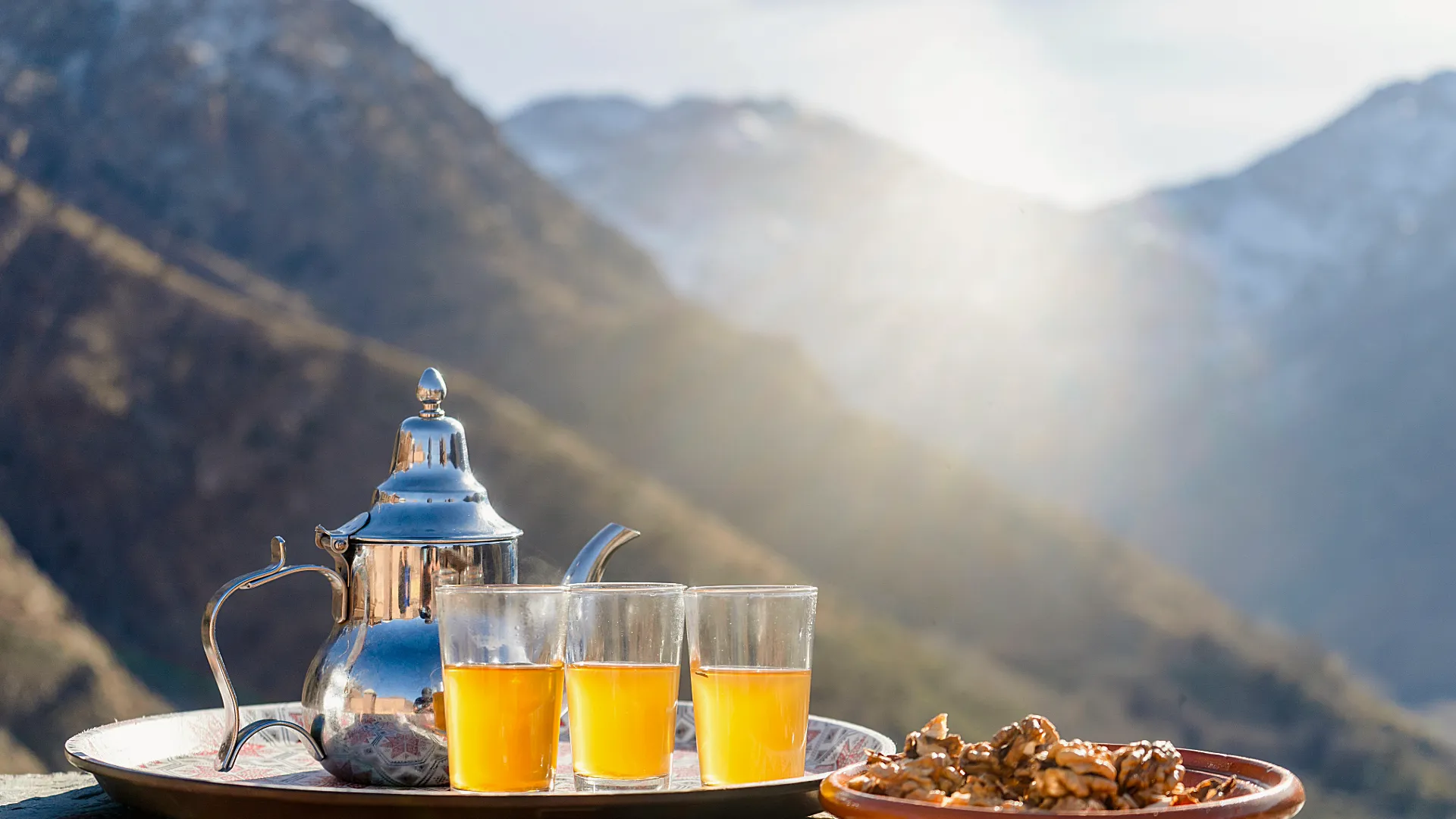
Altitude does something specific to sleep and appetite that is difficult to manufacture at sea level. Mornings start earlier without effort. A short walk between villages, tea taken on a terrace with the valley below, a slower dinner once the temperature drops after dark: none of this is scheduled as wellness. It is simply what the mountains ask of a day, and most travellers find they do not resist it.
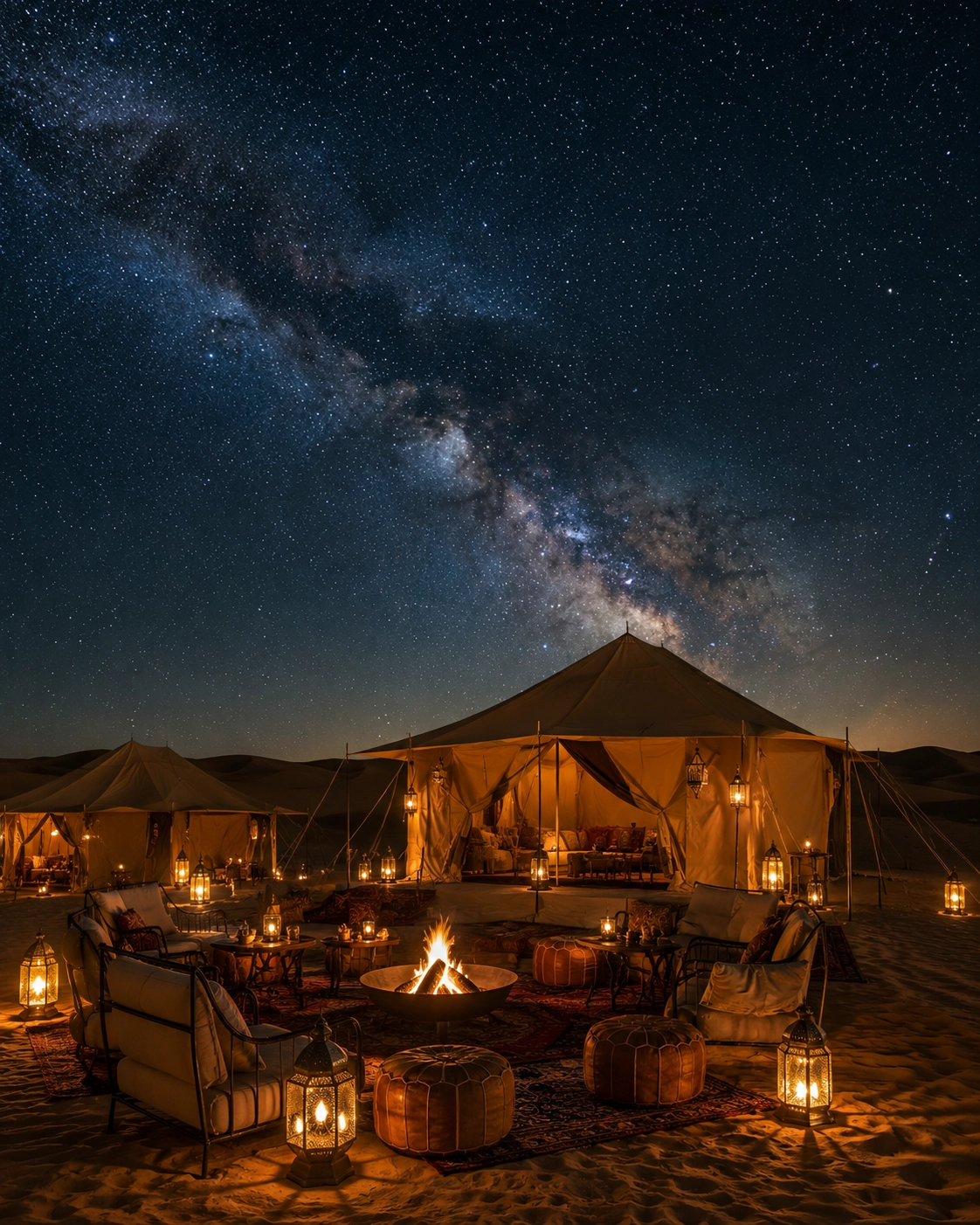
The Sahara does not need to be crossed for someone to feel restored. What it offers is something rarer than spectacle: an absence of sound so complete that the ears keep searching for something for the first hour, then stop.
There is no traffic, no consistent wind unless one is blowing, and once the sun drops the darkness is dense enough that stars appear in numbers most travellers have never actually seen. This is not a place to find yourself. It is simply a place with almost nothing to respond to, which is its own kind of rest, one that does not require a single dune to be climbed.
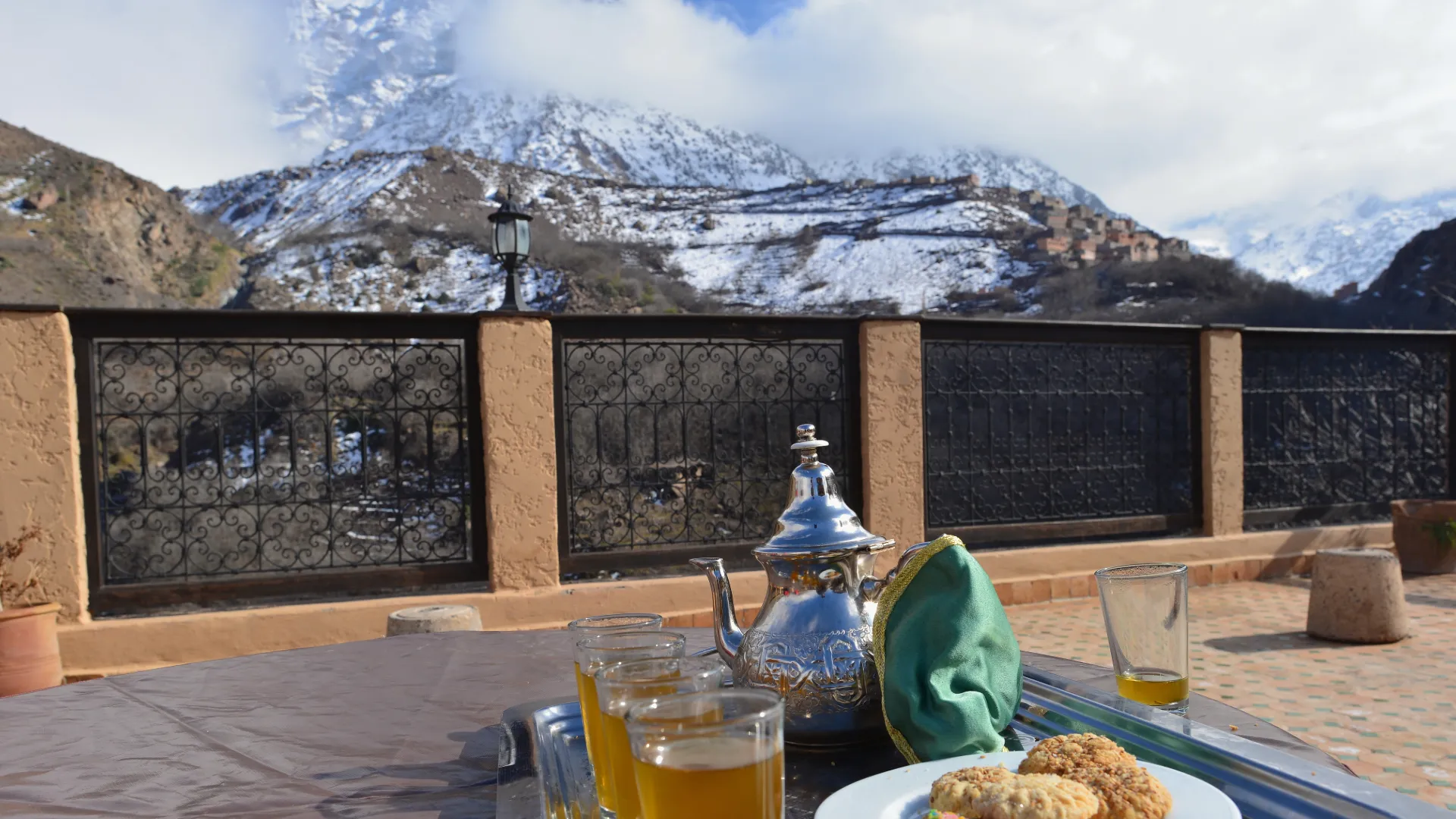
Moroccan food, eaten properly, is already unhurried. Bread is bought that morning. Olive oil comes from a specific press, often a specific tree. Herbs go into a tagine that has been simmering since before anyone sat down, and a meal shared from one dish naturally slows the pace at which people eat it.
None of this needs reframing as a wellness practice. It is simply how food already works here: seasonal because the market has little choice in the matter, communal because that is how a table is set, and slow because the cooking itself takes time. A traveller does not need to change what they eat in Morocco. They mostly need to stop rushing through it.
Movement in a Morocco journey rarely needs to be scheduled as exercise. It is built into the shape of the days: walking a medina's lanes because there is no other way through them, climbing a mountain path between villages, swimming in a lagoon that happens to be calm enough to actually swim in.
None of this asks for a fitness plan or a class timetable. The body moves because the places require it, at a pace set by the terrain rather than a programme, and that difference is usually what makes it feel restorative rather than performed.
The single change that does the most for how a journey feels is rarely a treatment or a destination. It is time itself: fewer hotel changes, mornings that are not rushed to a fixed departure, an afternoon left with nothing scheduled at all.
This is where wellness and KaMabia's approach to private journeys meet directly. A route built with fewer transitions and longer stays in fewer places gives the body room to actually settle into somewhere, rather than simply passing through it. Shaping a journey this way is not an added service. It is the same discipline that makes any KaMabia route work, applied specifically to how a day feels rather than only where it goes.
How a journey feels matters as much as what it contains. Wellness, here, is not an addition to a route. It is the pace the route is given.
Explore A Different Kind of Silence