
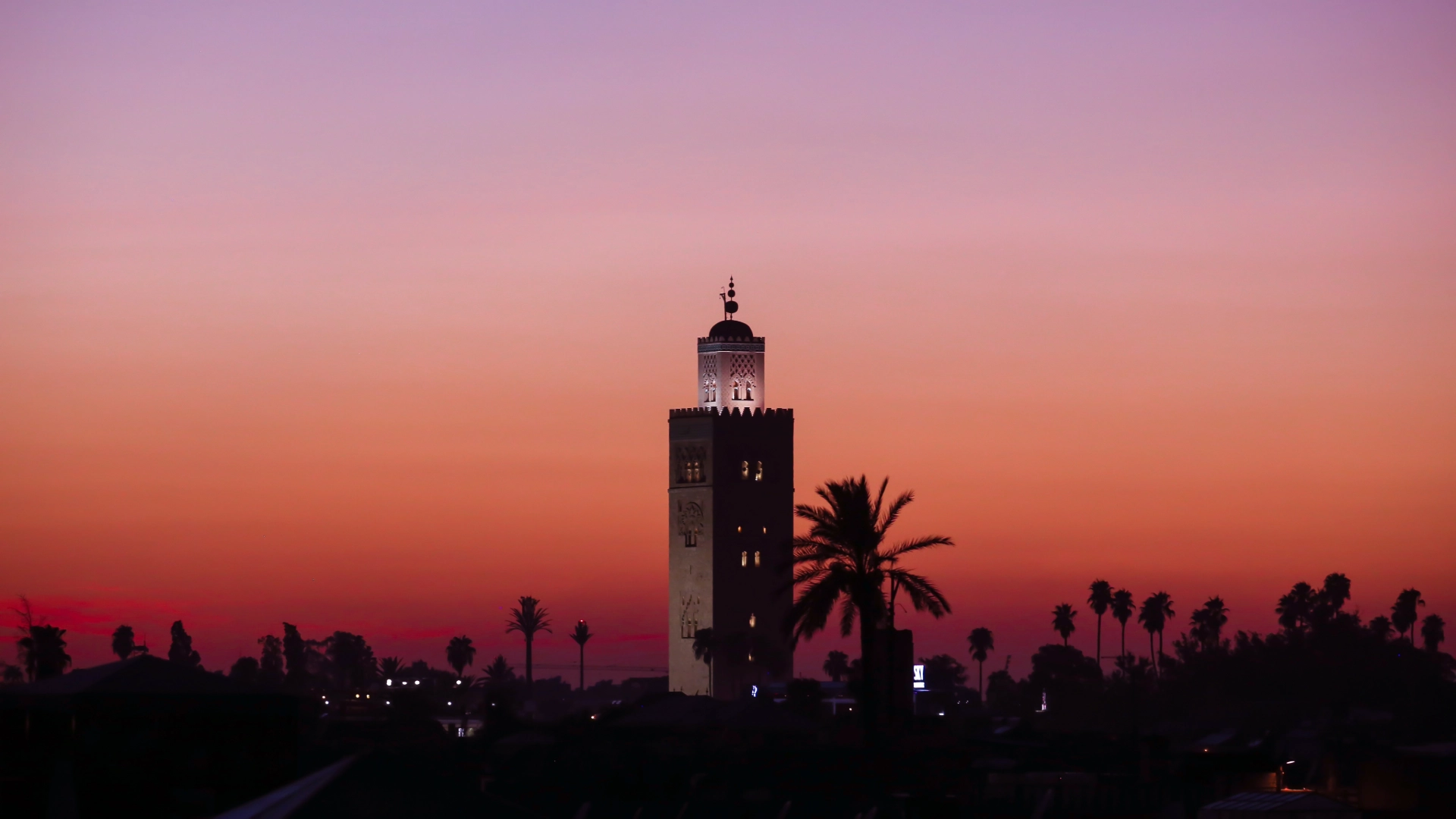
An eleven day journey from Marrakech through kasbah country and the Sahara to imperial Fes and the Atlantic coast.
The days below show how this journey is intended to flow. Each one can be adjusted once we start planning together.
The city before the road south begins.
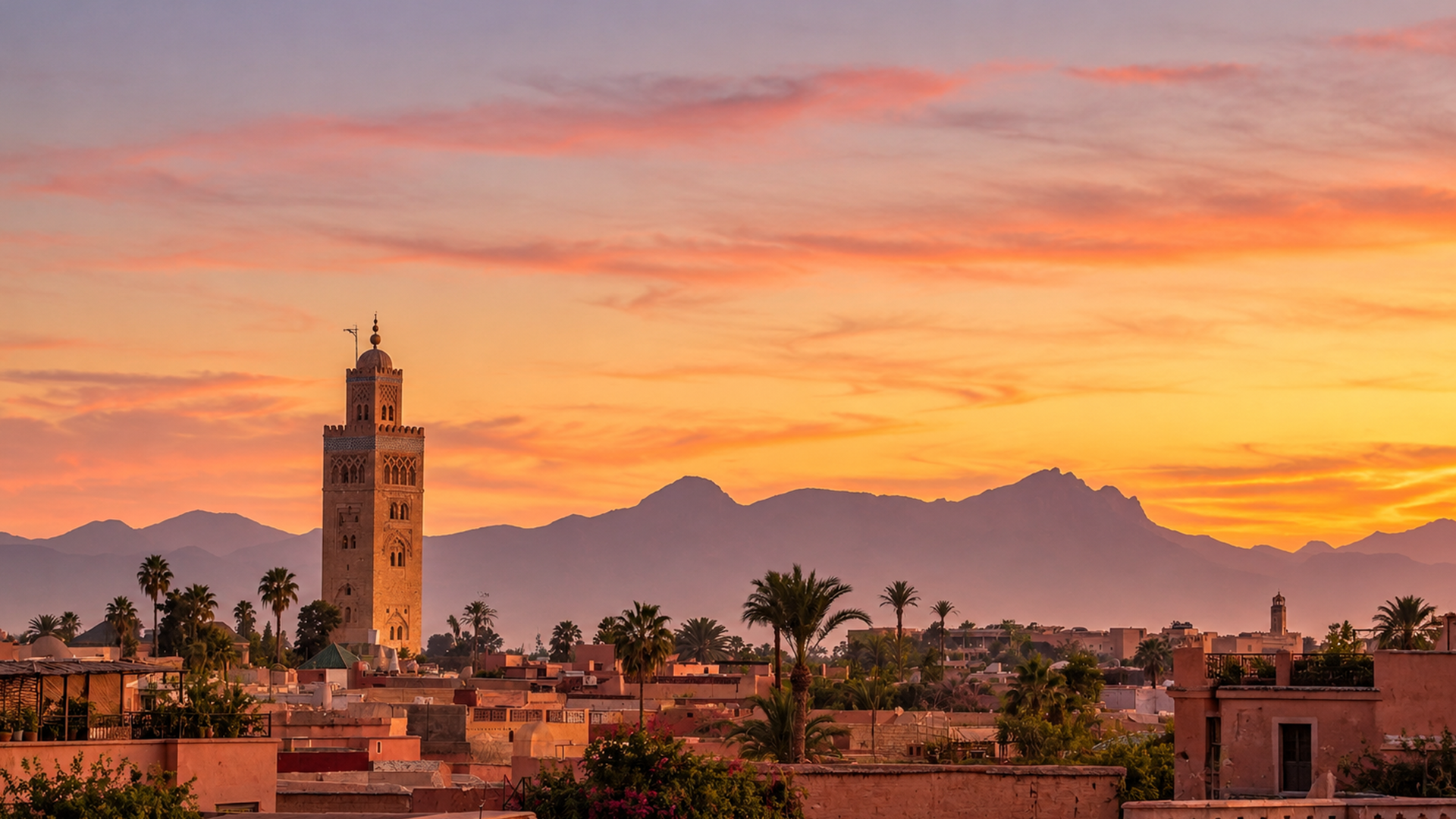
A private transfer meets you on arrival, with the rest of the day left open to settle into the city at its own pace.
The journey begins without a schedule attached to it. A private driver meets you on arrival and takes you into the city, and the remainder of the day is yours to use as you like, resting after the flight or walking out into the medina while the light is still soft.
Marrakech introduces itself gradually rather than all at once. A first walk through the souks, the smell of street food carts along the edges of Jemaa el Fna, the particular sound of the square filling as evening approaches. There is nothing to complete on the first day. Eleven days lie ahead, and this one is simply the threshold.
A guided day through the Saadian Tombs, the Bahia Palace and the Koutoubia, before Jemaa el Fna fills again as the evening begins.
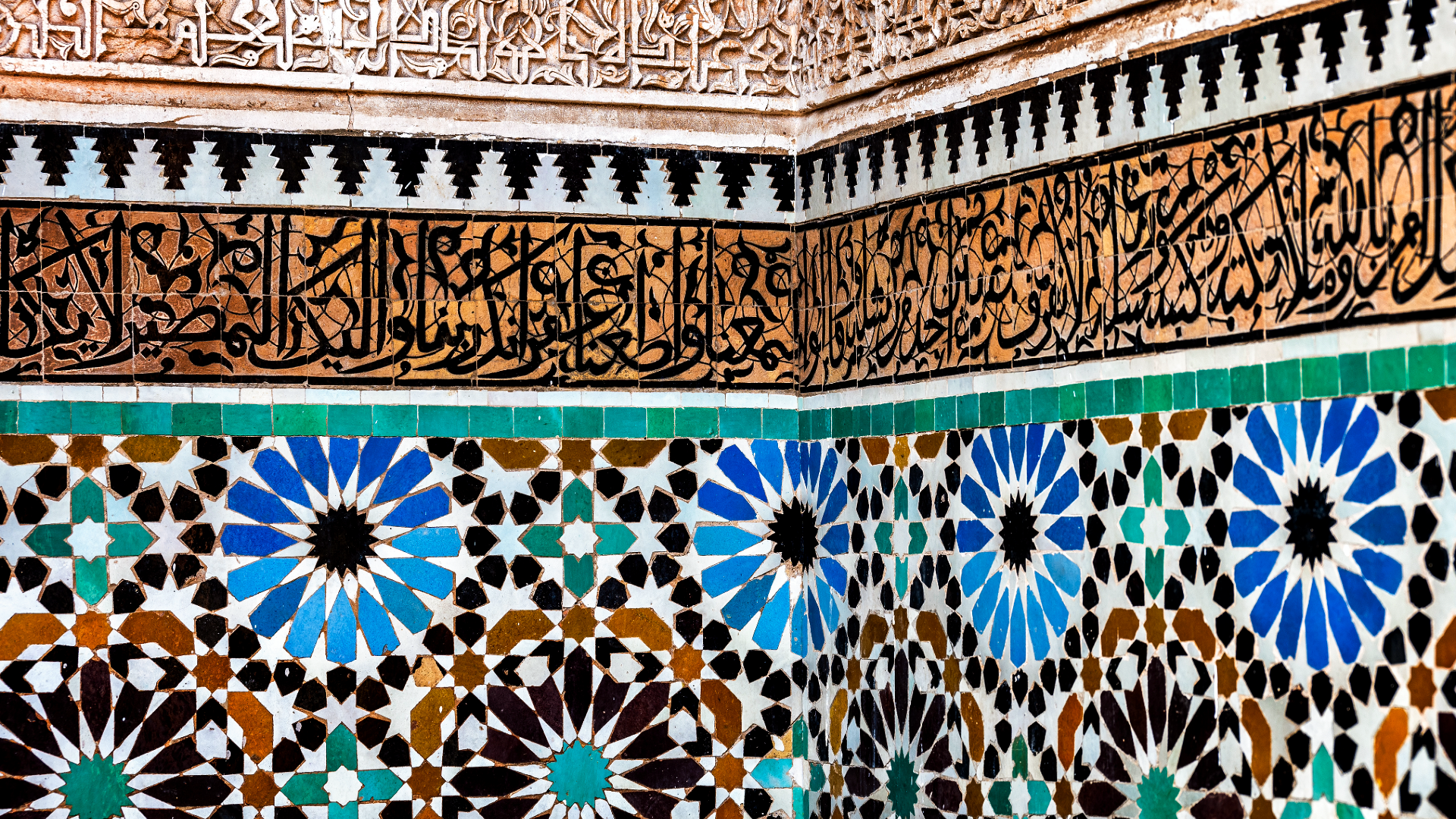
The Saadian Tombs are easy to miss and worth the search, a small, dense room of marble and cedar built to be seen by few people. The Bahia Palace opens out by contrast, courtyard after courtyard of zellij and carved plaster, built for a nineteenth century grand vizier who wanted the largest palace in Marrakech and largely got it.
The Koutoubia's minaret sets the skyline the rest of the city is built around, visible from most of the medina's rooftops. As the afternoon turns to evening, Jemaa el Fna changes character entirely, food stalls assembling, storytellers and musicians taking their usual corners, the square becoming what it has been for centuries rather than what it looks like at midday.
A day shaped around the medina's working craft economy: rugs, lamps and copperwork, with time reserved for a hammam or a quiet rooftop before evening.
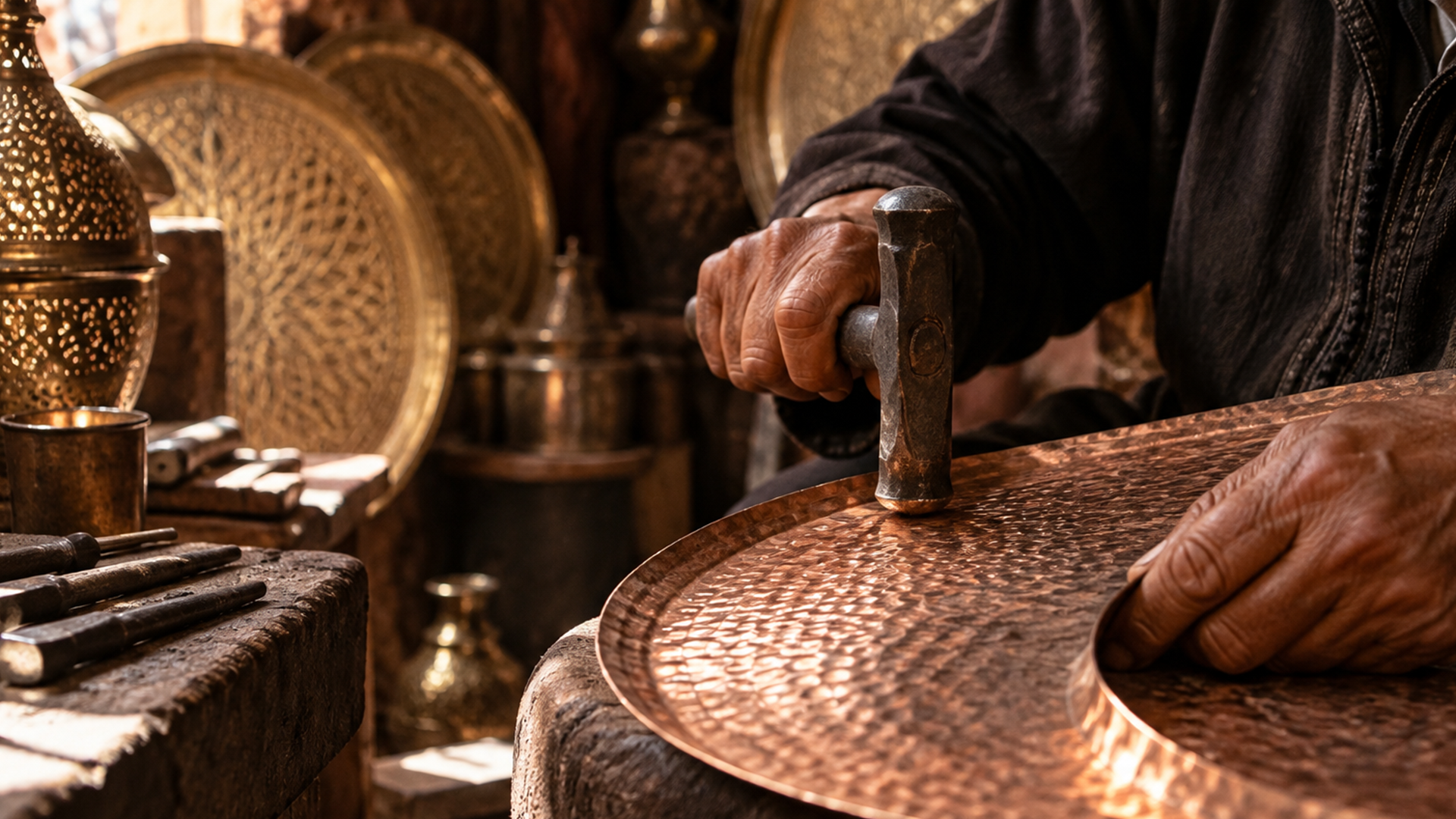
The medina's souks are organised by trade in ways that reward slowing down rather than browsing quickly. A private guide with real knowledge of rugs changes what a Beni Ourain or a vintage Boujaad actually represents, and copperwork and hand-hammered lamps are made within walking distance of where they are sold, not shipped in from elsewhere.
The afternoon is left open. A hammam, in the traditional sense of heat and water rather than a spa treatment, or simply a rooftop with mint tea and the call to prayer moving across the city. Either way, the day is built around pace rather than a list of stops.
Where the country stops being built from anything but the ground beneath it.
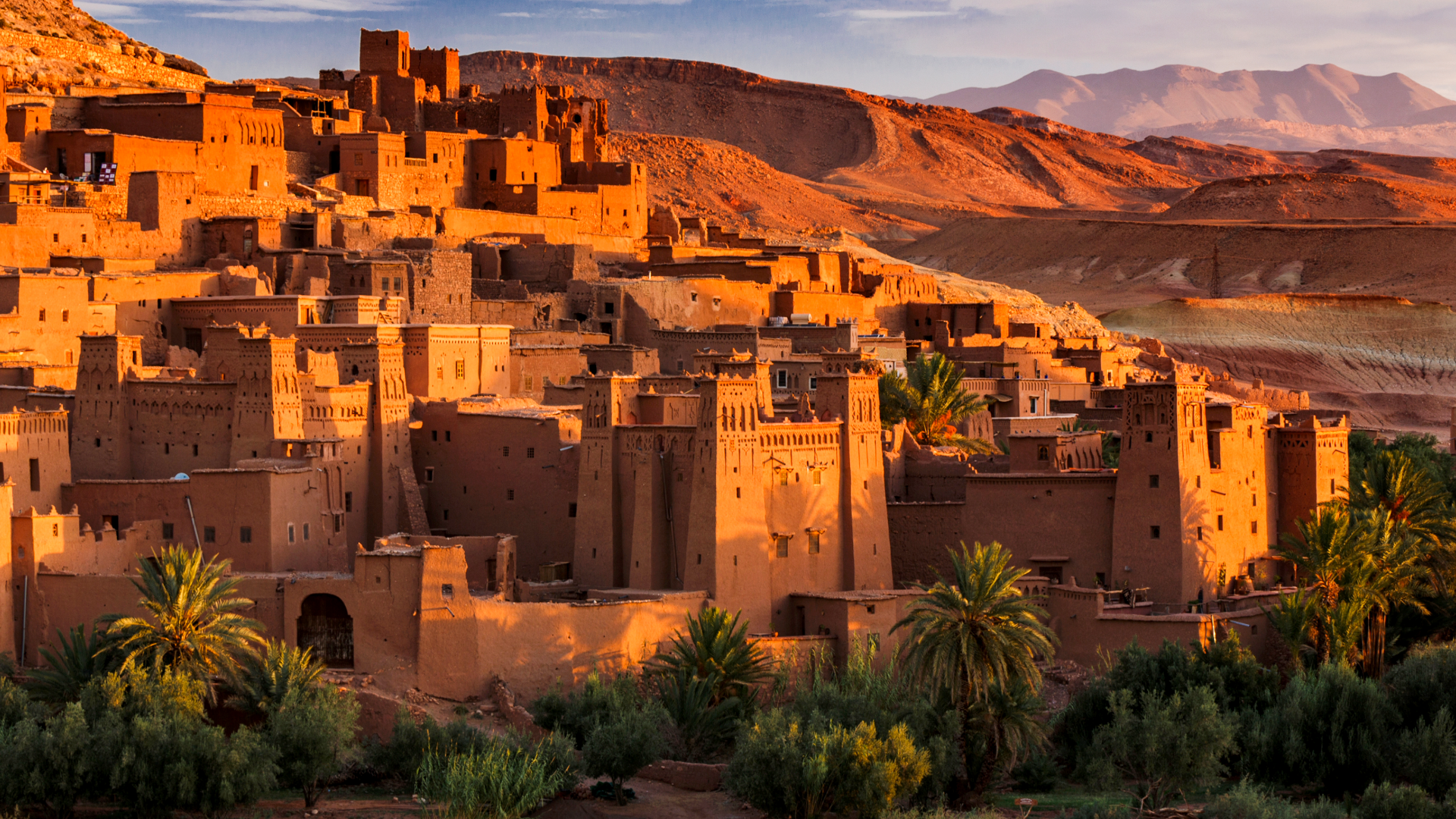
The road climbs the High Atlas and drops into a different Morocco entirely, one built from the earth it stands on, with Aït Ben Haddou as the day's centre.
The Tizi n'Tichka pass carries the road over the High Atlas, Amazigh villages visible on the slopes below as the elevation climbs. On the far side, the country changes register almost immediately. This is kasbah country, where buildings are made from the same red earth they stand on rather than imported stone.
Aït Ben Haddou is the clearest expression of this, a fortified ksar rising directly from the hillside, still inhabited in part, its walls the same colour as the ground around them at every hour of the day. From there the road continues into Skoura's palm grove, where the pace changes again, and city gives way to oasis for the first time in the journey.
A day spent inside the oasis rather than moving through it, built around Kasbah Amridil and an unhurried afternoon.
Skoura's palm grove is large enough to walk through for a genuine morning without repeating ground, kasbahs rising periodically from among the palms, most still in some form of use. Kasbah Amridil is the best preserved of these, a seventeenth century structure now partly a small museum, offering a clear sense of how these buildings actually worked rather than simply how they look from outside.
The rest of the day is left deliberately light. After four days that included a border crossing of the High Atlas, this is the point in the journey built for standing still.
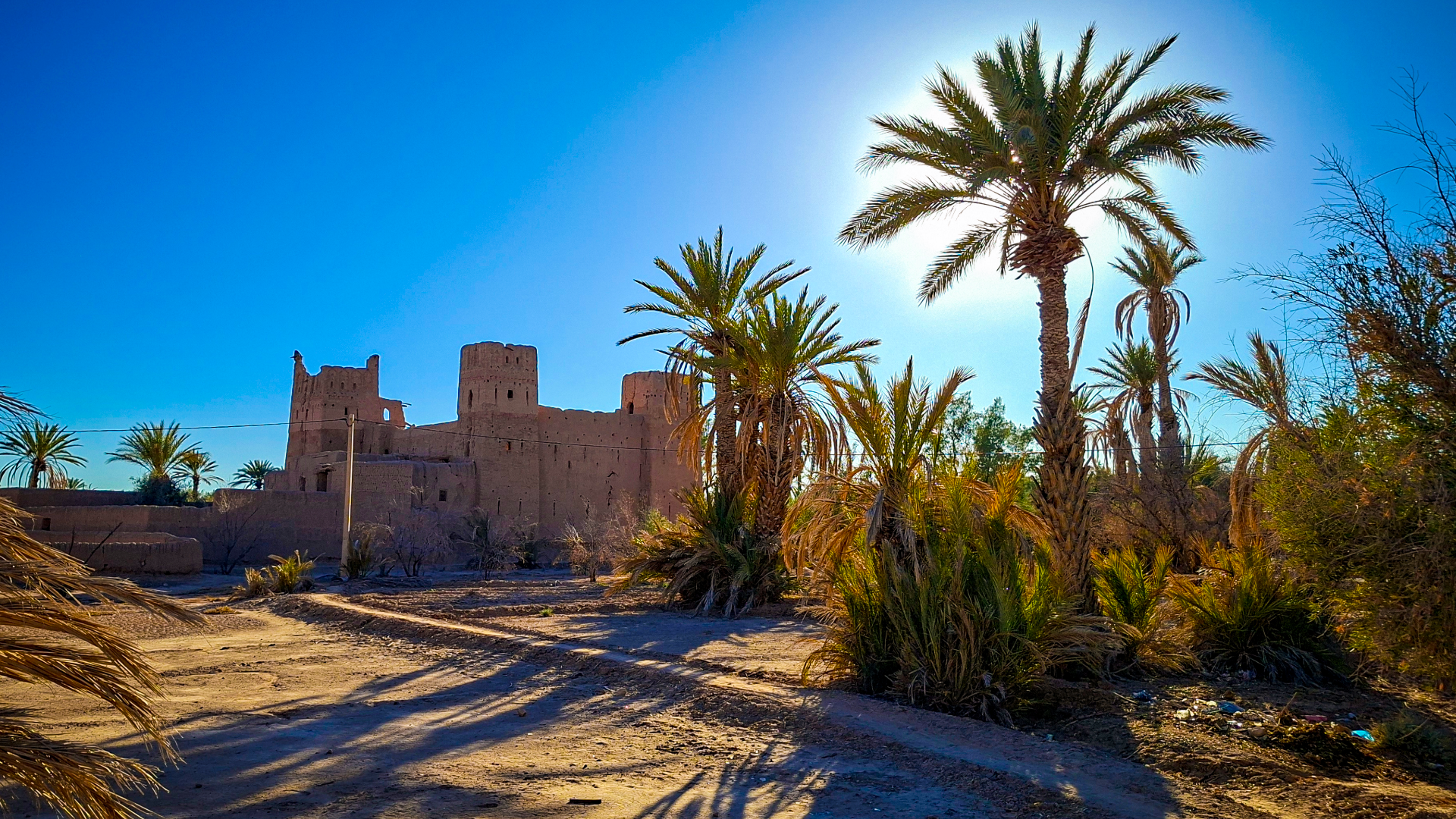
The road runs out of things to pass, and then the dunes are simply there.
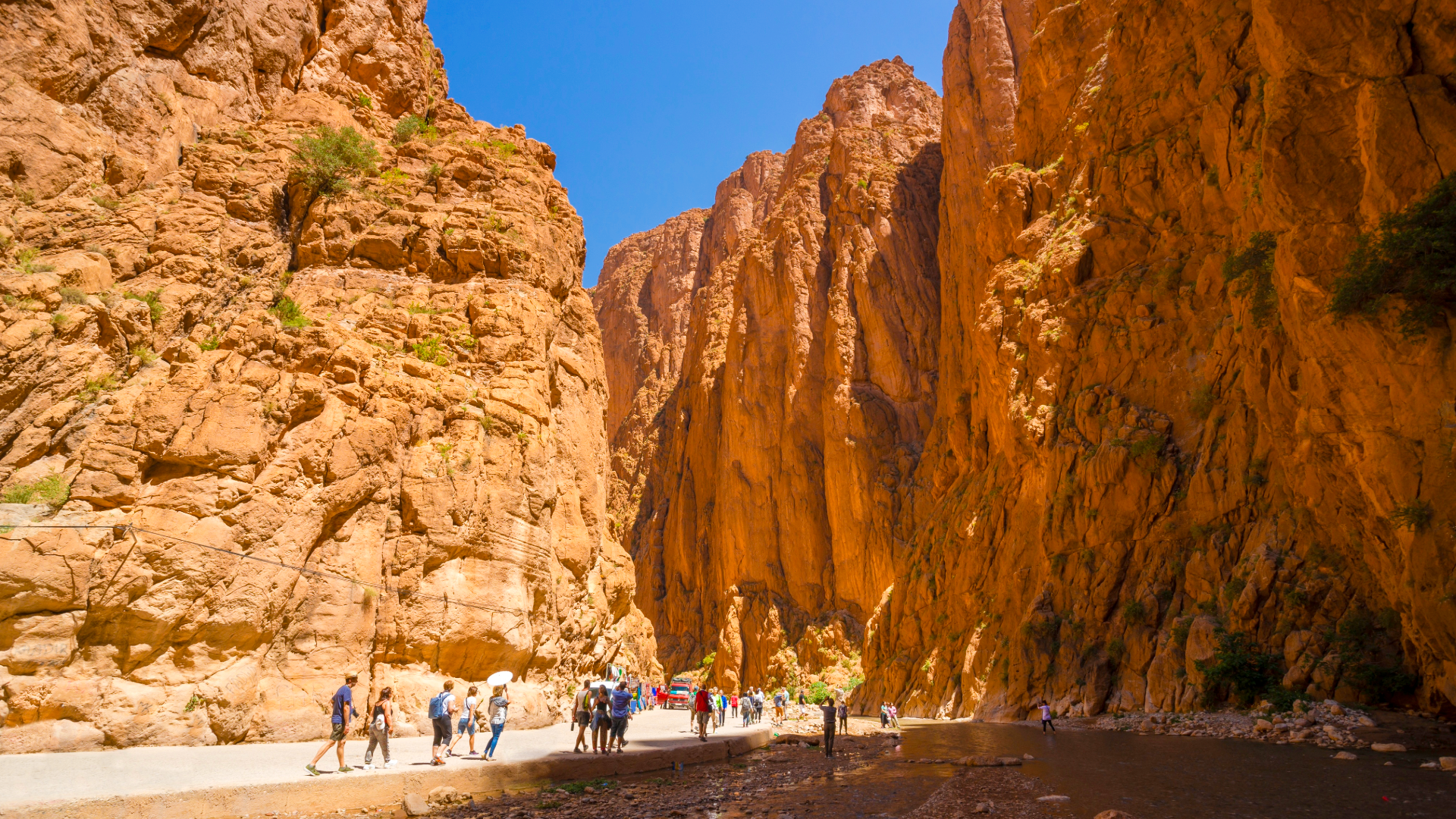
The Todra Gorge and the town of Erfoud lead toward Erg Chebbi, where the day closes with a camel crossing into the dunes as the light drops.
The Todra Gorge narrows sharply, walls of rock rising close on either side of the road before opening again toward Erfoud, a working town on the edge of the true desert rather than a destination in itself. From here the landscape empties in earnest, palm groves and irrigated ground giving way to flat, bare country.
At Erg Chebbi, the dunes rise out of that flat ground abruptly, orange and considerably taller than they appear from a distance. Camels carry you the final stretch into camp as the light lowers, dinner served under canvas once full dark arrives, and the particular silence of the Sahara setting in once the camp itself goes quiet.
A long transfer day, the Ziz Gorge and the Middle Atlas carrying the road from desert to cedar forest before Fes appears by evening.
This is a genuinely long day, and there is no honest way to describe it otherwise. The Ziz Gorge narrows the road between rock walls south of Erg Chebbi before the route climbs into the Middle Atlas, cedar forest replacing sand within a few hours of driving, a shift in landscape as complete as any in the journey.
The crossing matters because of what it connects. Without this drive, the Sahara and imperial Fes would simply be two separate journeys. Covering the distance yourself, watching the country change through the windscreen rather than skipping between two fixed points, is what makes the contrast between them mean something by the time Fes appears ahead in the evening light.
A day inside the medina's living systems: the tanneries, the madrasas and the Moulay Idriss II shrine, with a rooftop close where timing allows.
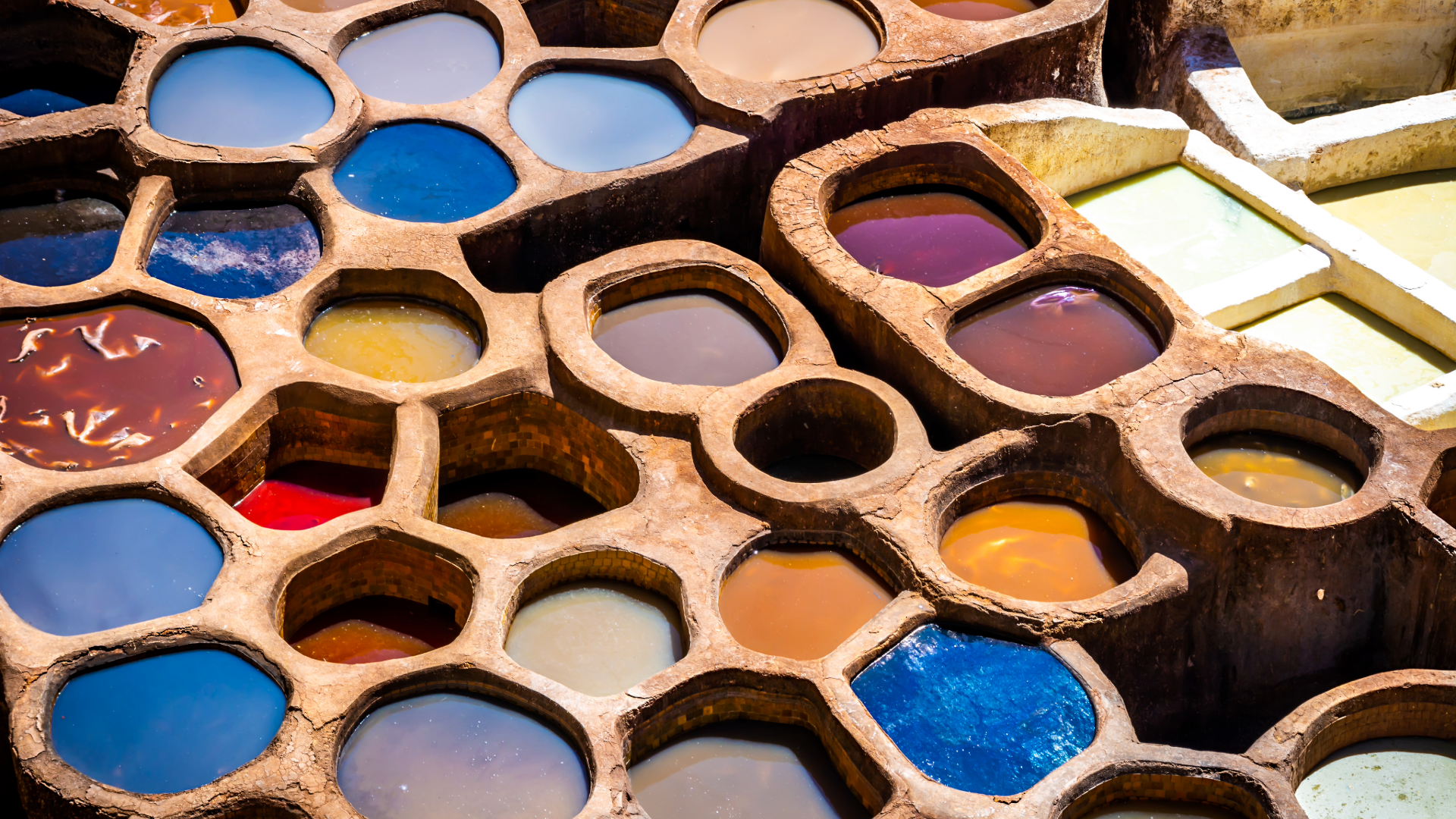
Fes does not organise itself around monuments so much as around continuity. The tanneries have worked the same way, in the same location, for centuries, hides moving through the same stone vats coloured by the same natural dyes. The madrasas built to house students of religious law still carry the plasterwork and cedar carving commissioned for that exact purpose, not restored into a museum piece but simply maintained.
The Moulay Idriss II shrine sits at the heart of the medina, and the streets around it fold in on themselves in a pattern that makes sense once you understand it was never designed for cars, only for people, animals and the trades that needed proximity to each other. Where the timing allows, a rooftop at sunset gives the whole system a shape from above that is impossible to read from inside it.
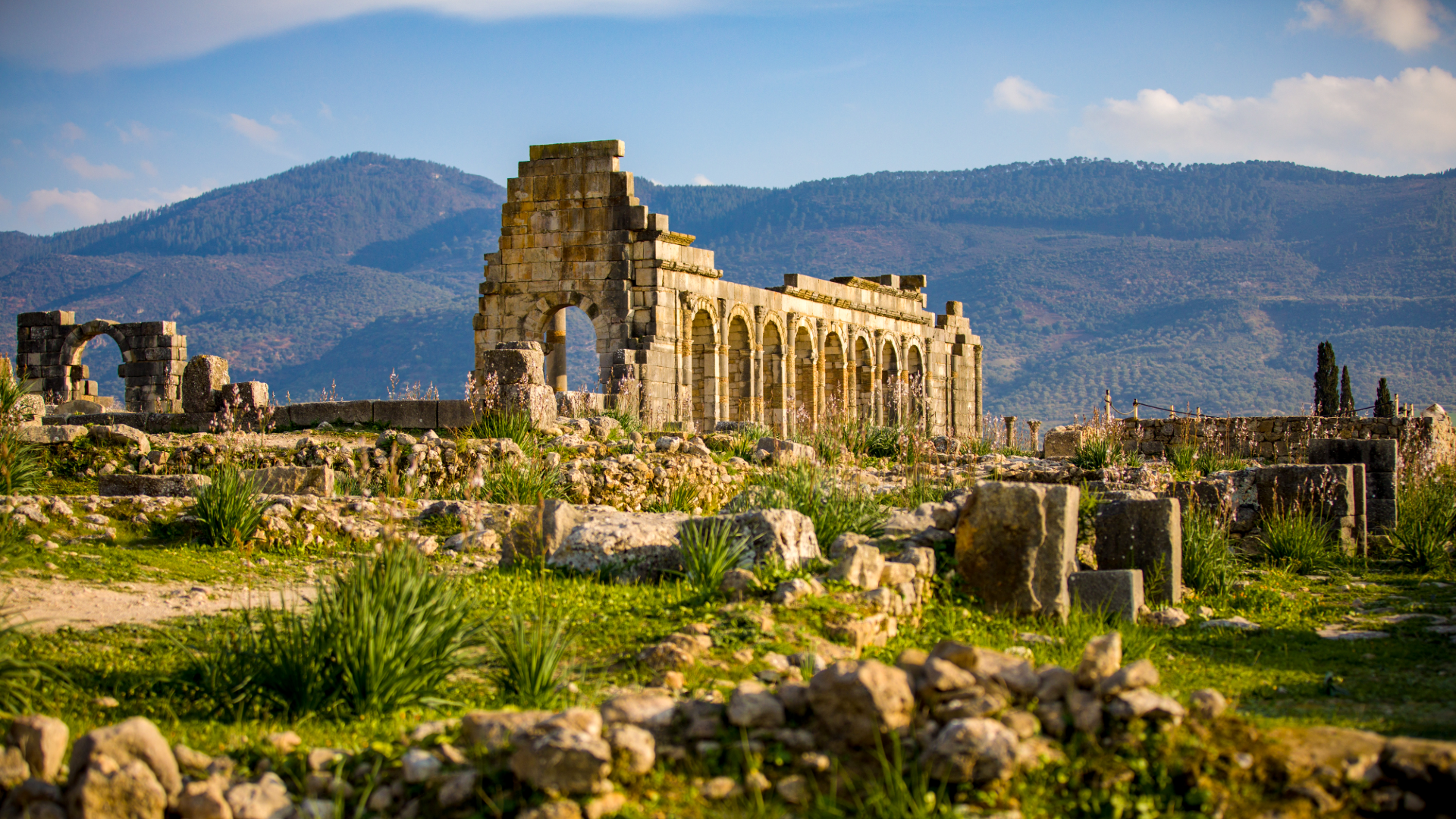
A day trip connecting Roman Volubilis and imperial Meknes, extending the journey's historical register well beyond Fes itself.
Volubilis and Meknes are usually treated as two separate stops, but they belong to the same story. Volubilis was the Roman Empire's furthest working outpost in this direction, its mosaics still largely in place on the ground where they were laid, olive presses and a triumphal arch standing in a landscape that has otherwise reverted to farmland.
Meknes took the same ambition and rebuilt it centuries later. Its walls run for kilometres, its gates and granaries scaled for an empire, commissioned by a sultan who wanted a capital to rival anything in Europe. Seeing both in one day extends the journey's historical register considerably further back than Fes alone would suggest, Rome and the Alaouite dynasty read as two versions of the same instinct rather than unrelated excursions.
The interior gives way to open water.
The road west closes the interior loop, arriving at the Hassan II Mosque and an Atlantic evening after nine days inland.
The road west from Fes covers considerable ground, the interior's density gradually loosening as the country flattens toward the coast. Casablanca arrives as a genuine shift in register after nine days spent almost entirely inland, traffic and modern towers replacing medina walls, the Atlantic visible again for the first time since day one.
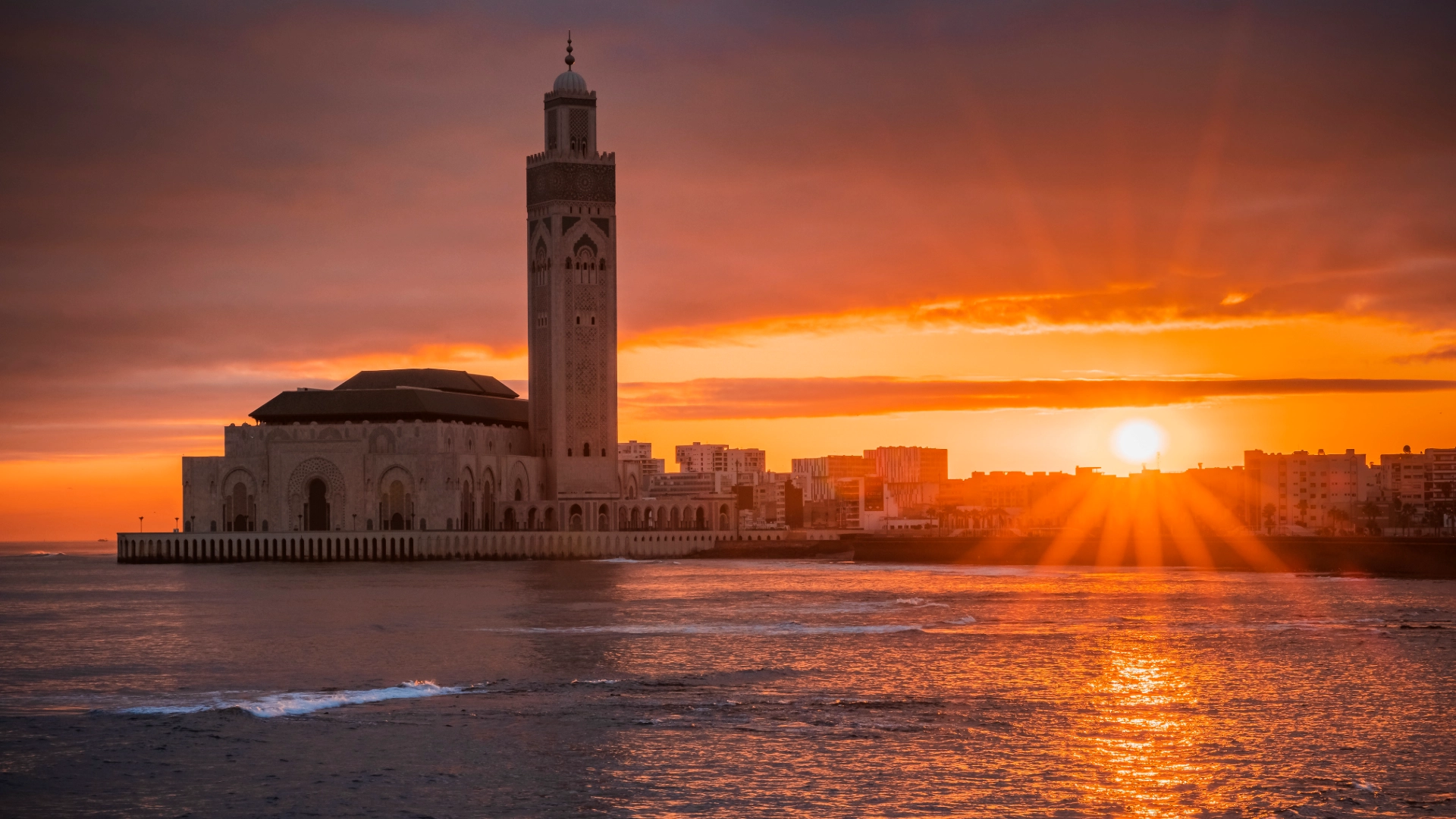
The Hassan II Mosque anchors the change. Built directly over the ocean, part of its floor glass over open water, it is a modern structure on a scale that matches anything seen earlier in the journey, but built from an entirely different set of ambitions. Where the evening is left free, that contrast, interior history against coastal modernity, is worth simply sitting with.
A flexible private transfer closes eleven days from Marrakech to the Atlantic coast.
The final morning is left open, with departure arrangements shaped around your onward flight. Eleven days closed the distance between a walled inland city and the open Atlantic, by way of kasbah country, the edge of the Sahara and the accumulated history of Fes, Volubilis and Meknes.
The journey opens in a walled red city and closes on the open Atlantic, with a great deal of country crossed between them: kasbah walls built from the earth beneath them, two nights where the Sahara begins, a mountain crossing into cedar forest, and the accumulated history of Fes, Volubilis and Meknes.
Eleven days is enough to feel Morocco change more than once.