
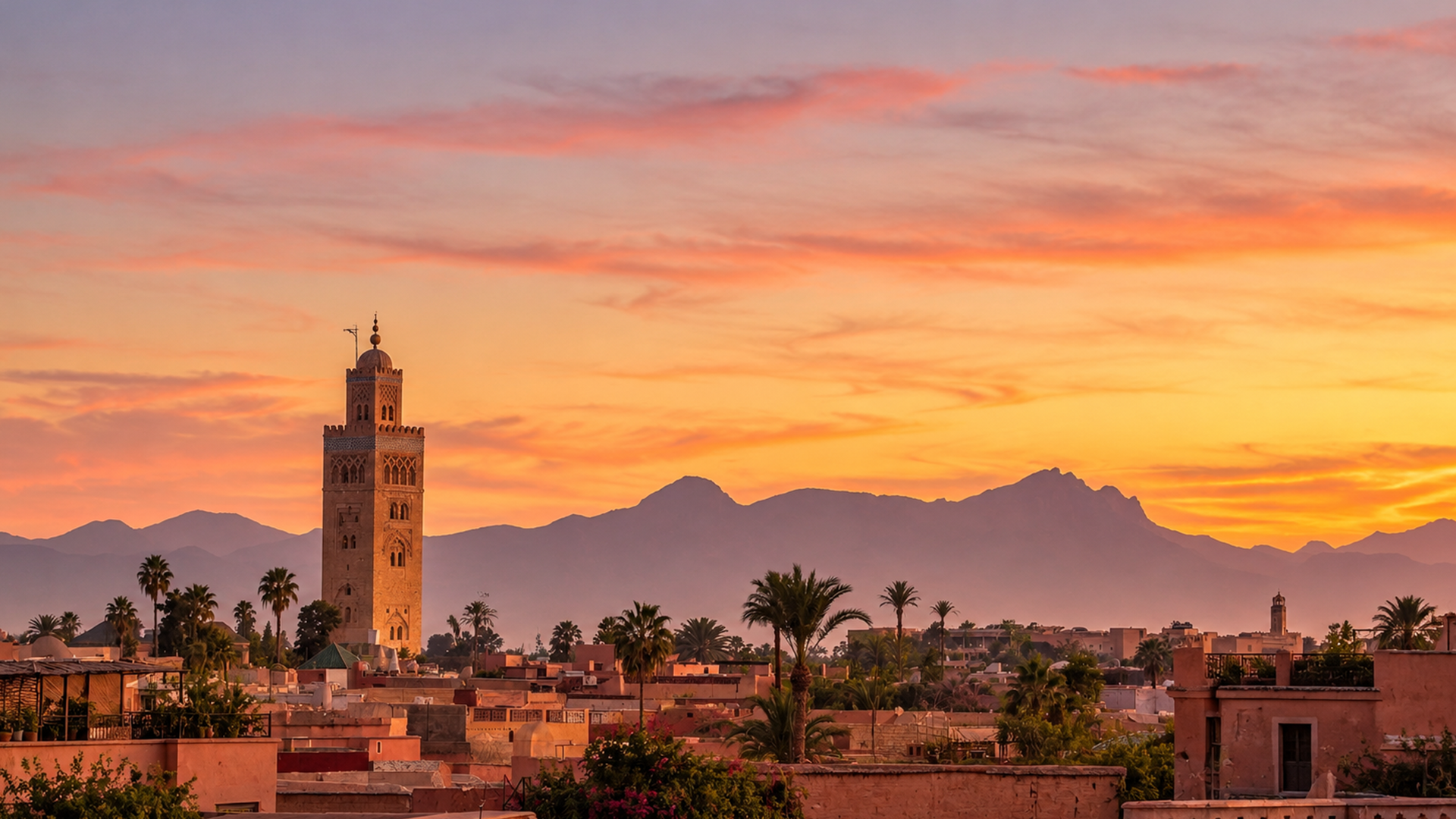
A thirteen-day journey through Morocco's markets, family kitchens, desert foodways and Atlantic table, from Casablanca to Essaouira.
The days below show how this journey is intended to flow. Each one can be adjusted once we start planning together.
Where markets set the tone before imperial history takes over.
A private arrival and a rooftop welcome overlooking the Atlantic.
A private driver meets you on arrival, with the rest of the day left open to rest.
The evening settles into a quiet rooftop welcome overlooking the Atlantic, a drink in hand, alcoholic or not, as the journey properly begins.
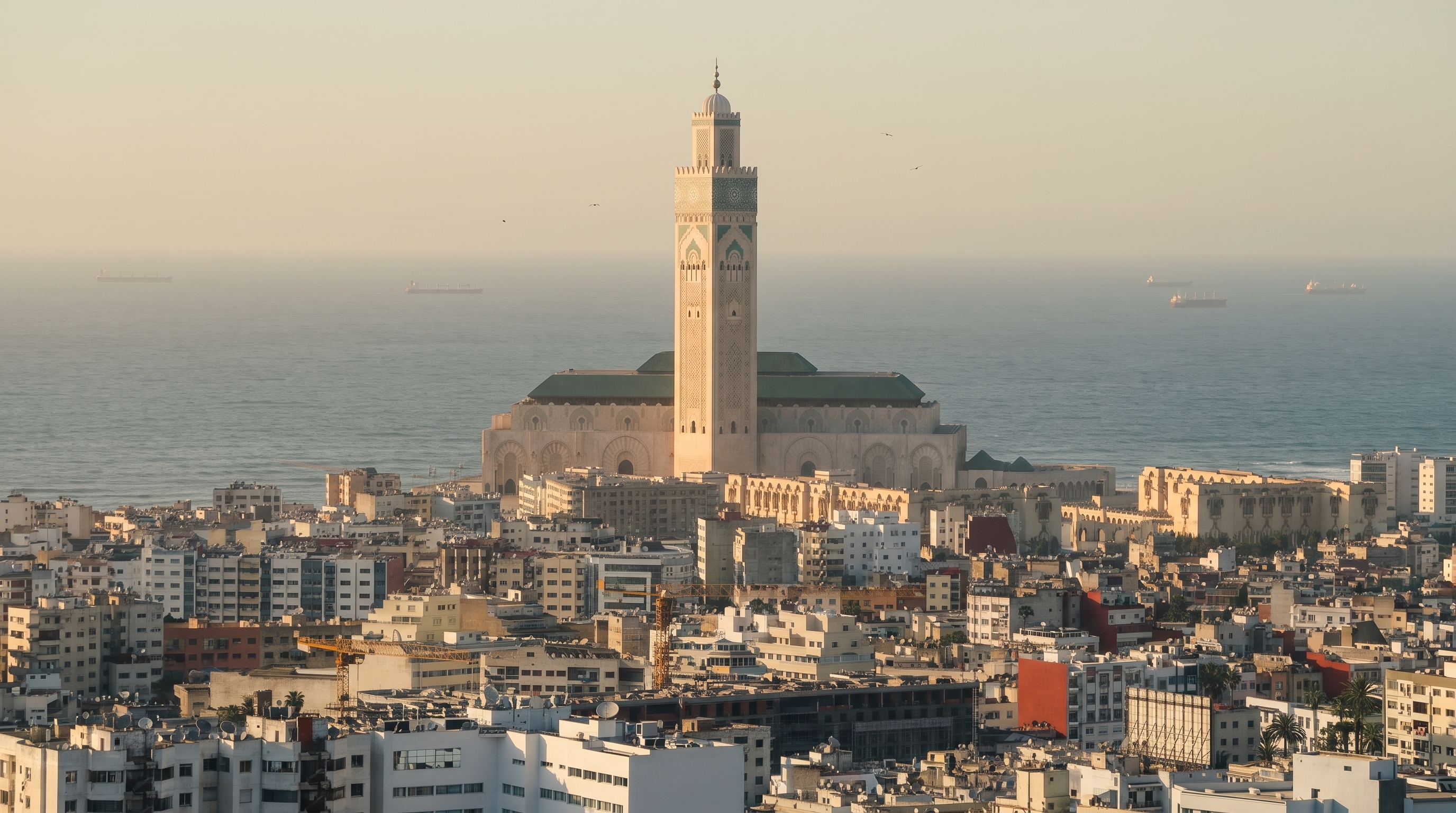
A central market and rziza open the day, followed by the Hassan Tower and the Mausoleum of Mohammed V.
The road to Rabat opens with a central market visit — rziza, a savoury Moroccan pastry, and almond sweets among the morning's finds.
The afternoon turns to history at the Hassan Tower and the Mausoleum of Mohammed V, with a boat experience where arranged, before settling into Rabat for the evening.
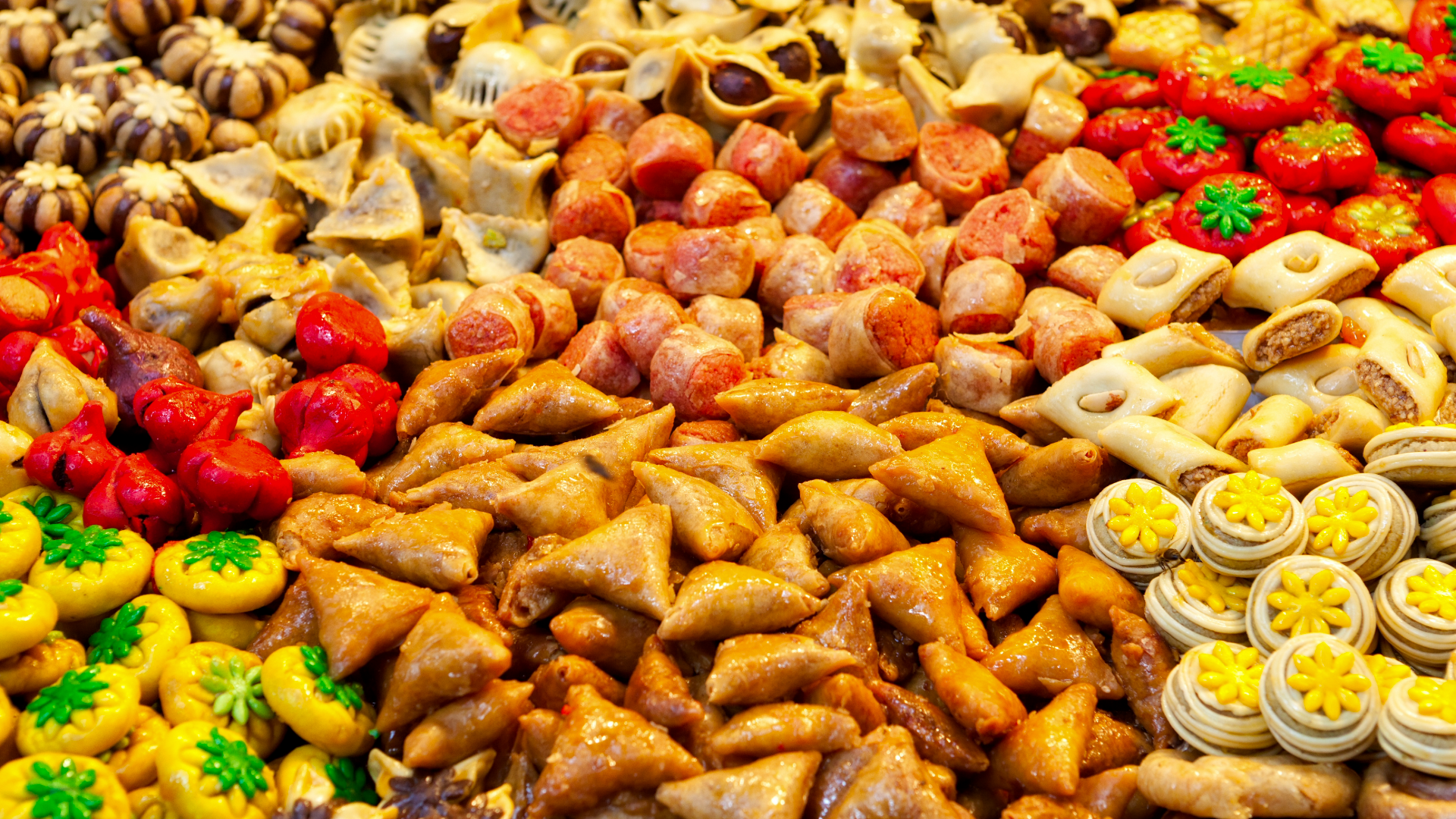
The Roman ruins of Volubilis and a vineyard-area tasting precede arrival in Fes.
The road continues through the Roman ruins of Volubilis before a vineyard-area stop, tasting olives, cheese and wine where confirmed — non-alcoholic alternatives available throughout.
By evening, the road narrows into Fes, arriving at its oldest medina.
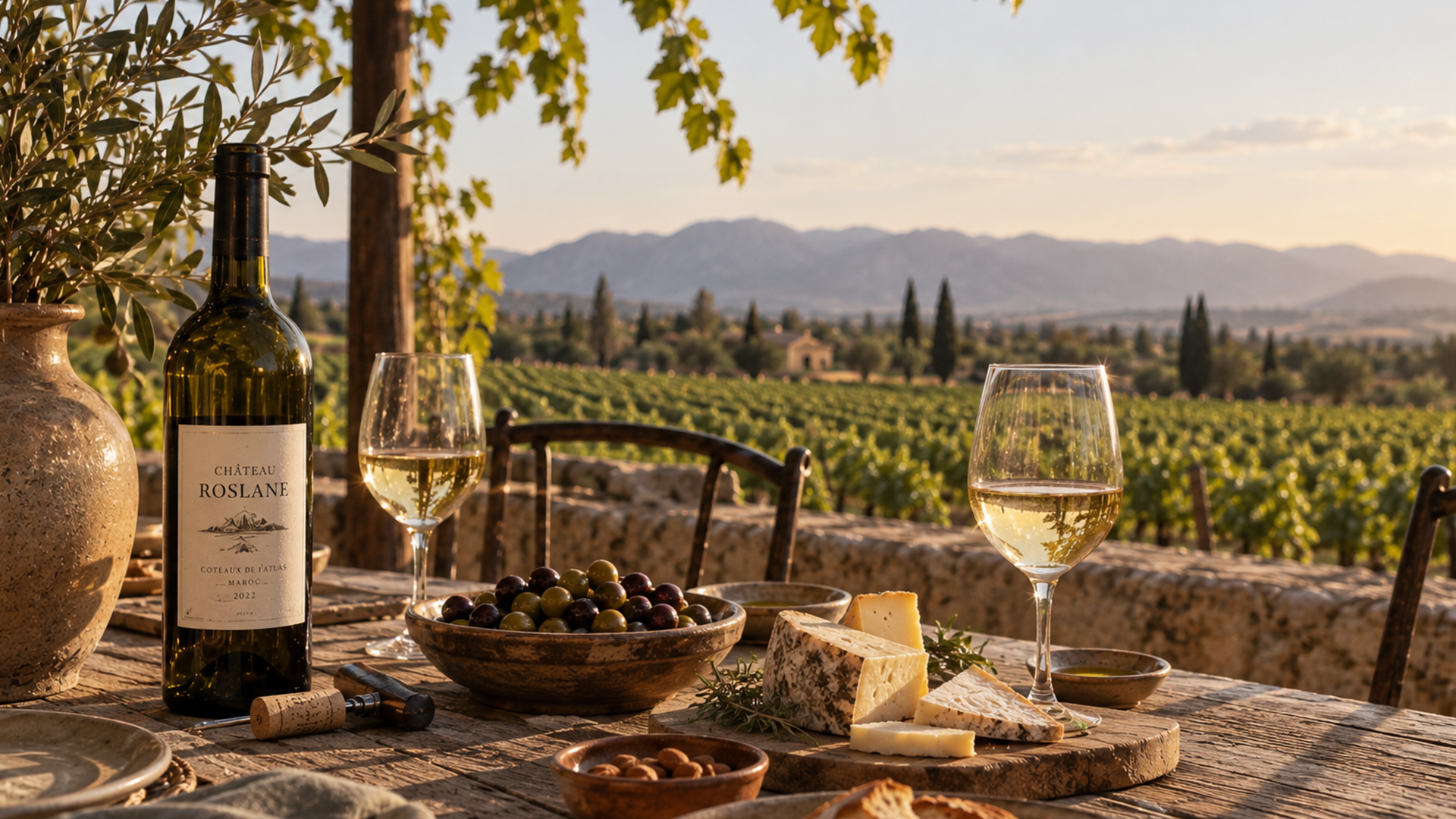
A guided walk through Fes's artisan quarters and souks, with a rooftop dinner where arranged.
Fes is explored through its medina — zellij and artisan traditions, souks arranged by trade the way they have been for centuries.
Where arranged, the evening closes with a rooftop dinner over the medina.
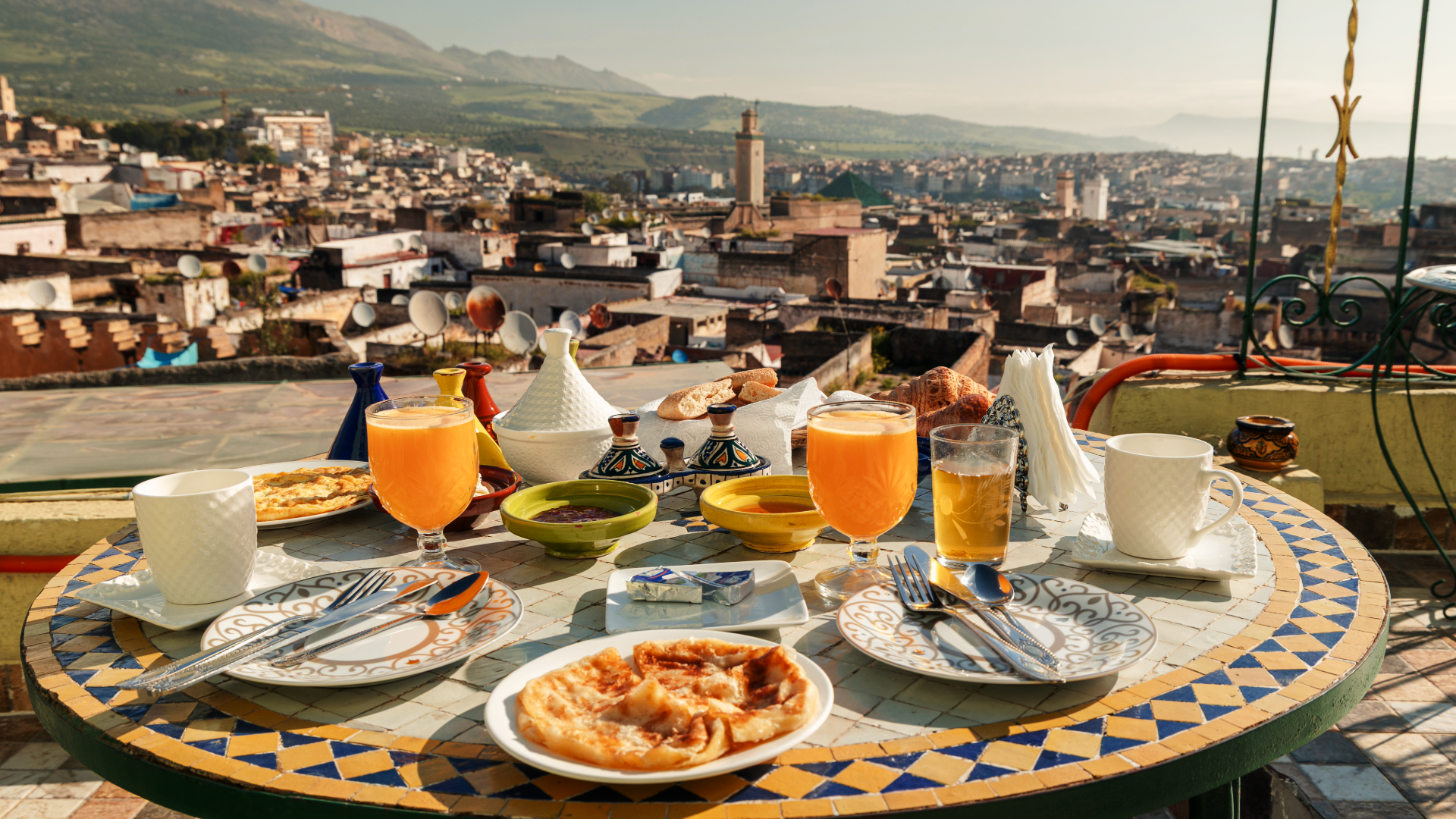
A single day given entirely to the kitchen.
A Moroccan coffee tradition and a hands-on cooking workshop, ending in a shared meal.
The day begins with Fes's own coffee tradition before turning fully hands-on — a market-led cooking workshop where ingredients are chosen first and the dishes follow.
The meal you prepare becomes the meal you share.
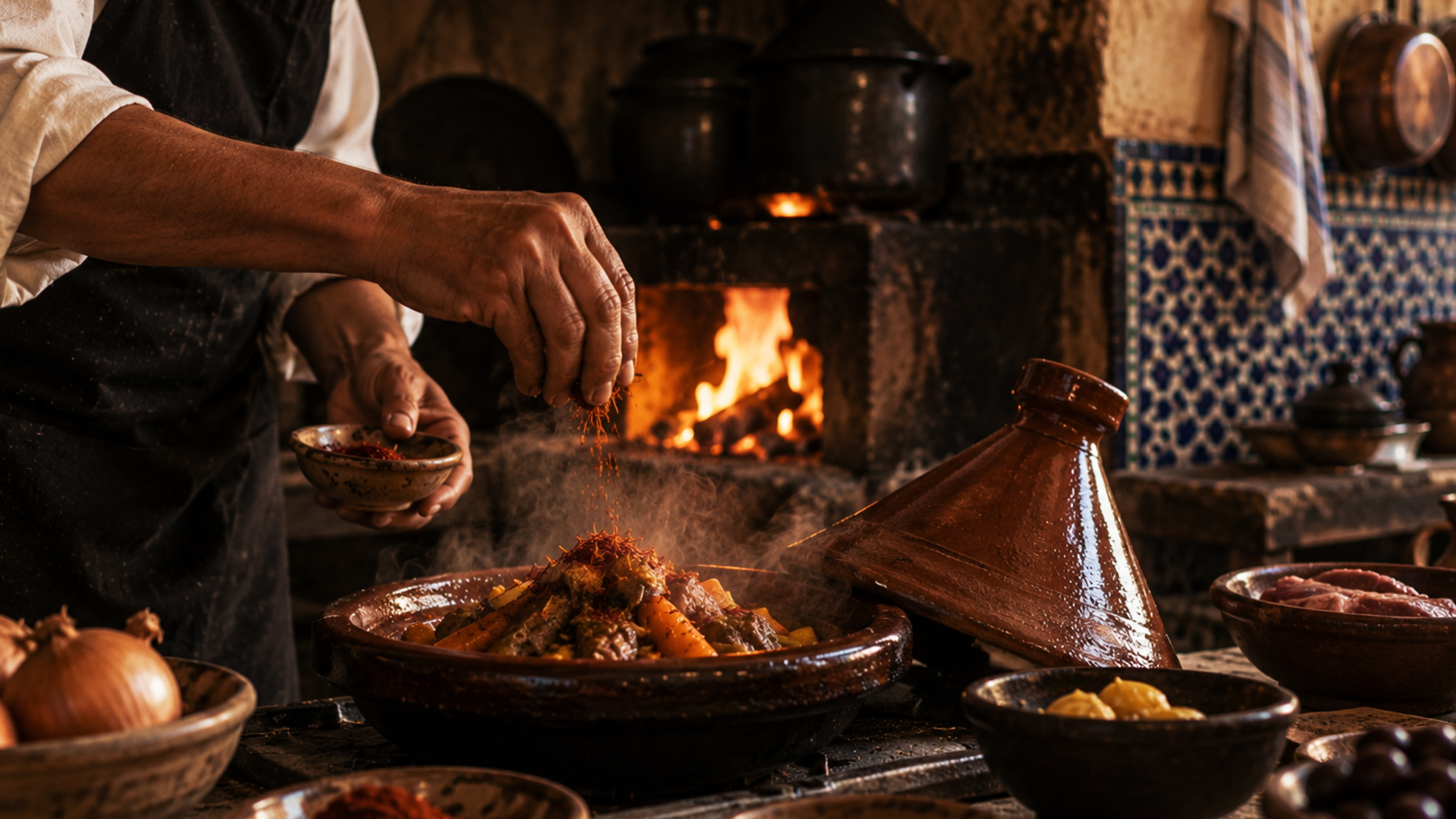
Where bread and fire replace restaurant tables.
Cedar forest around Ifrane gives way gradually to open country, a picnic at Dayet Aoua marking the last green stop before the desert begins in earnest.
The road climbs first, into cedar forest around Ifrane and Azrou where Barbary macaques are sometimes visible from the roadside, watched rather than approached. A picnic at Lake Dayet Aoua is the day's last unhurried stop while the country is still green.
Past Midelt, the road follows the Ziz River for a stretch before the landscape begins to thin out. The transition is gradual rather than sudden, cedar giving way to open country, open country giving way to something drier still, until the Sahara starts to feel like where the road has been heading all along.
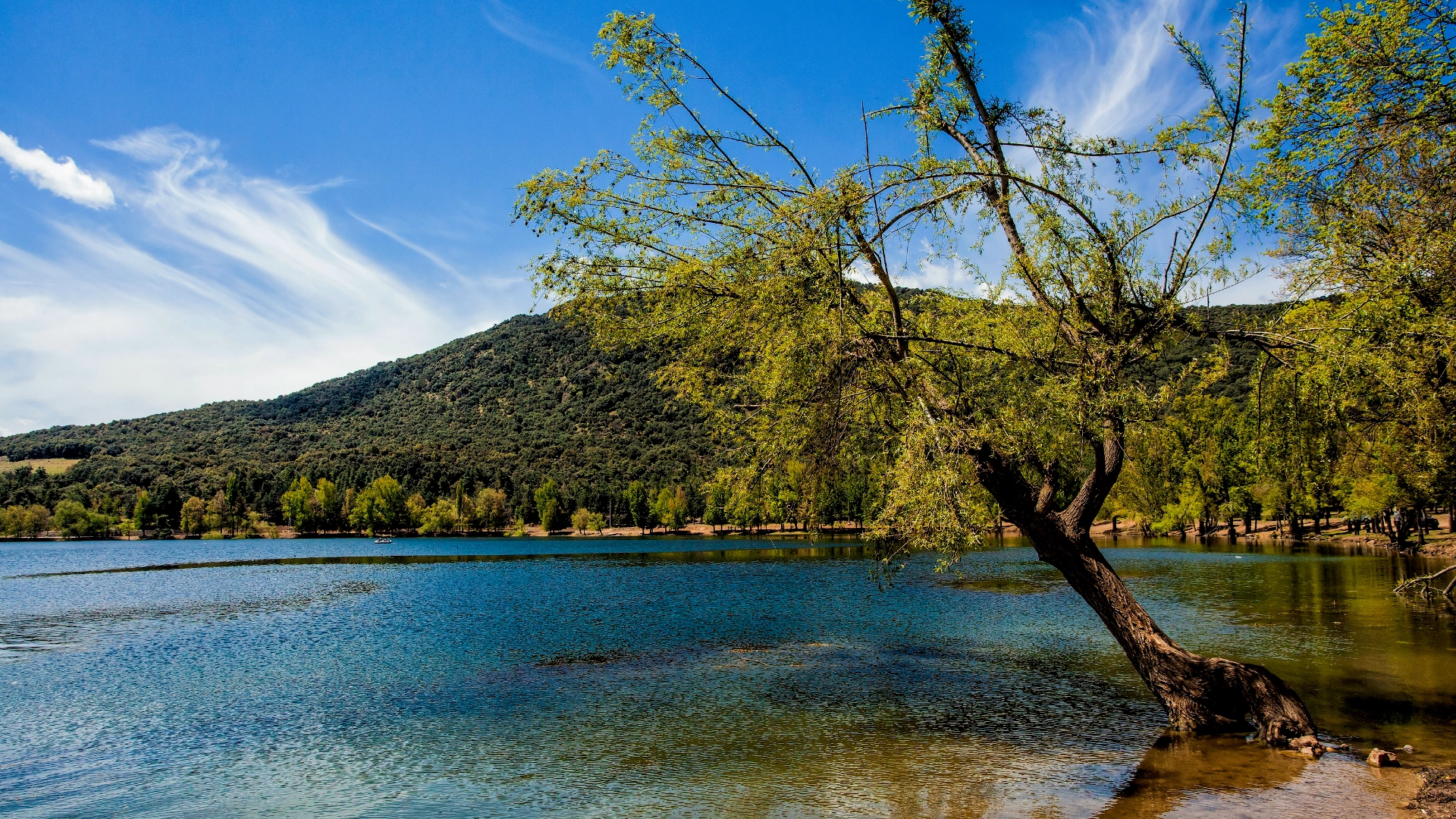
Khamlia's Gnawa tradition, and medfouna shared over tea and firelight, where confirmed.
The day stays close to camp, with simple dune-side meditation where suitable and a visit to Khamlia for its Gnawa musical traditions, presented respectfully rather than as performance on demand.
Where arrangements are confirmed, tea or a meal with a nomad family follows, alongside optional camel, quad or sandboarding activity, chosen according to preference and ability. Medfouna, a savoury flatbread baked in the sand, is shared over tea and firelight as evening settles.
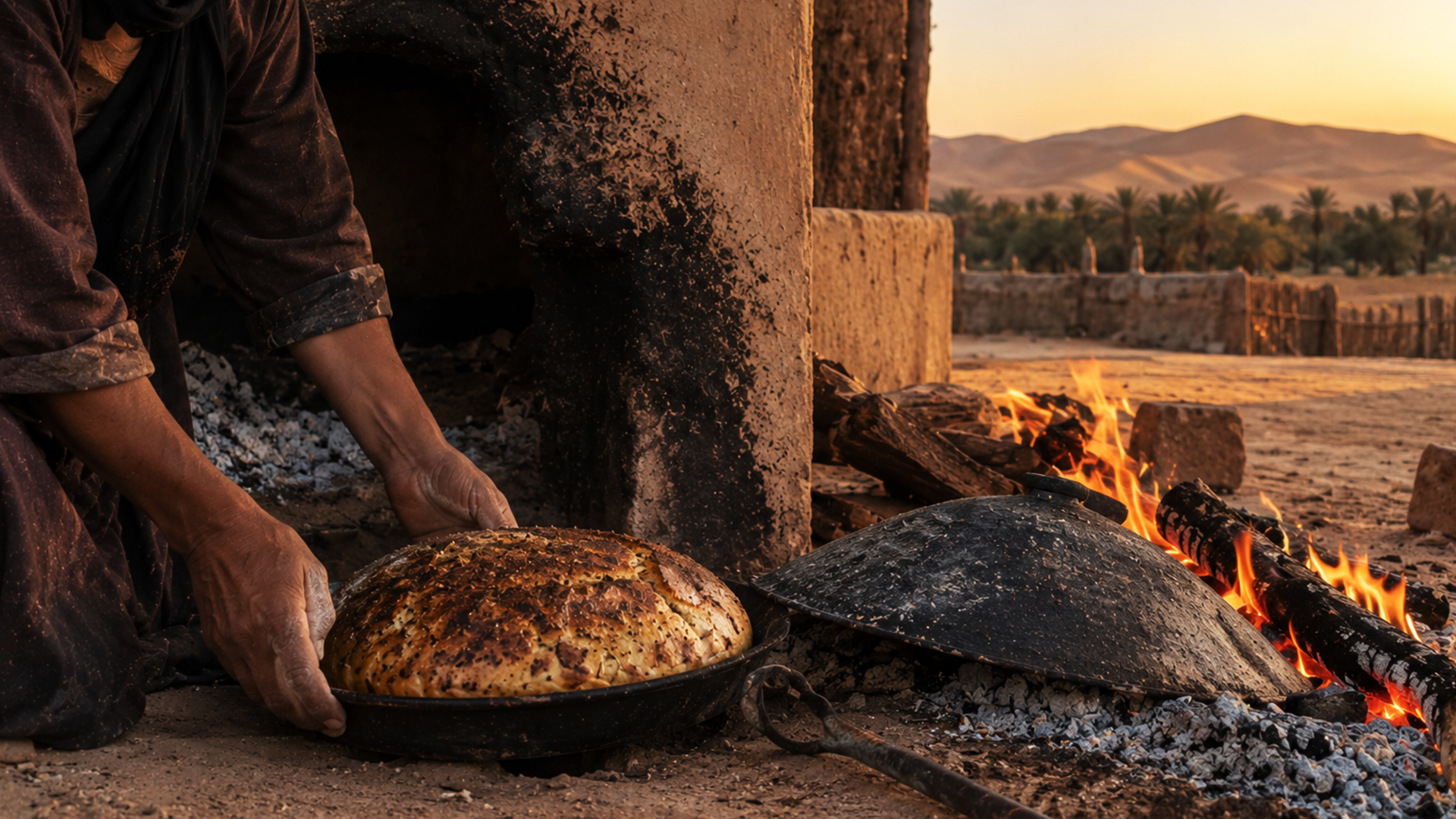
Rissani's market and the Moulay Ali Cherif Mausoleum precede arrival in Ouarzazate.
Rissani's market offers a genuine slice of regional food culture, medfouna and other market fare among its stalls, before a visit to the Moulay Ali Cherif Mausoleum.
The road continues through oasis and village landscapes toward Ouarzazate.
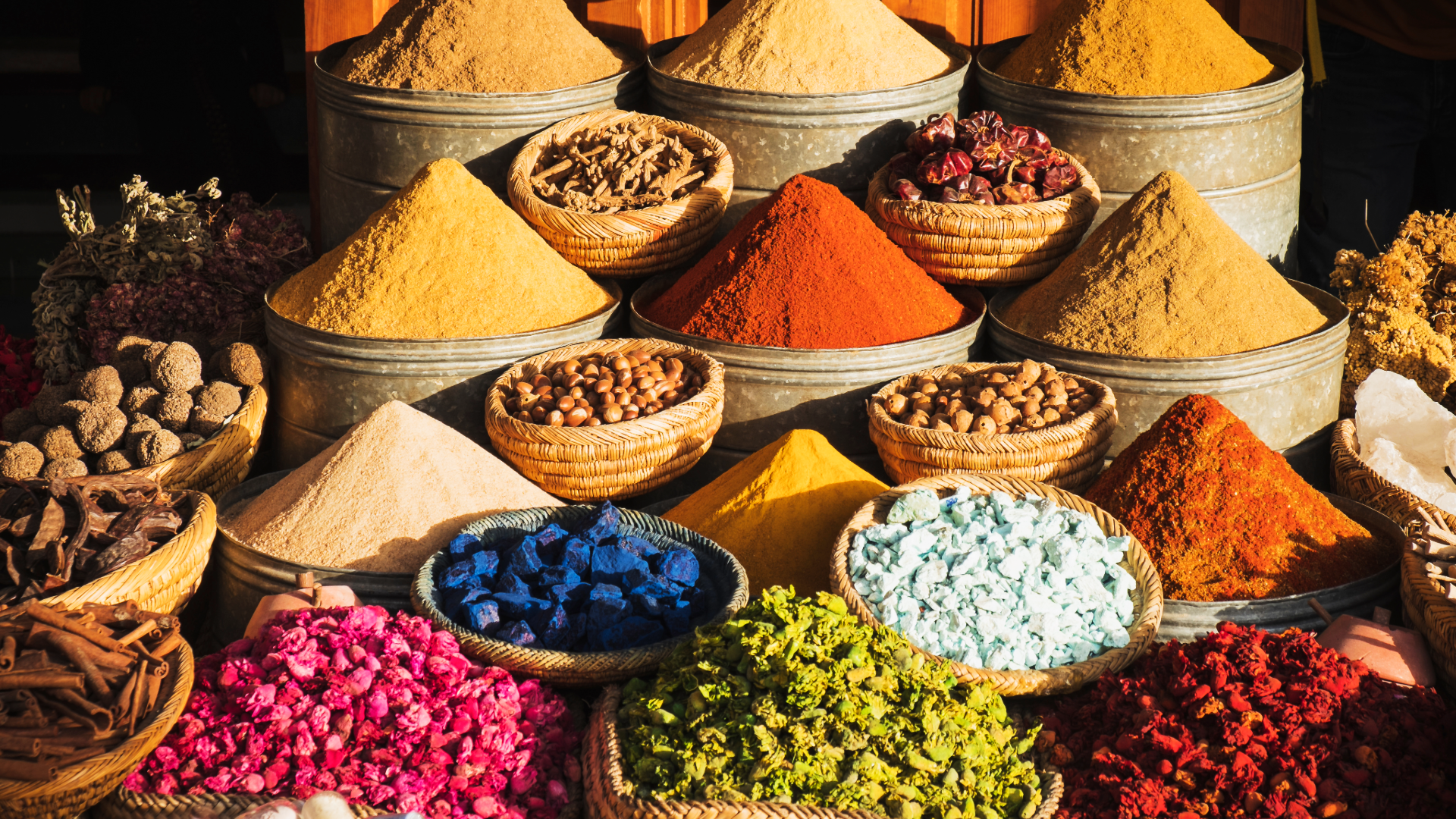
Where the city gives way to household knowledge.
The ksar of Aït Ben Haddou and Kasbah Taourirt precede the Atlas crossing into Marrakech.
The road crosses the Tizi n'Tichka pass, stopping at the earthen ksar of Aït Ben Haddou and Kasbah Taourirt, with artisan workshops where supported.
By evening, the mountains give way to Marrakech.
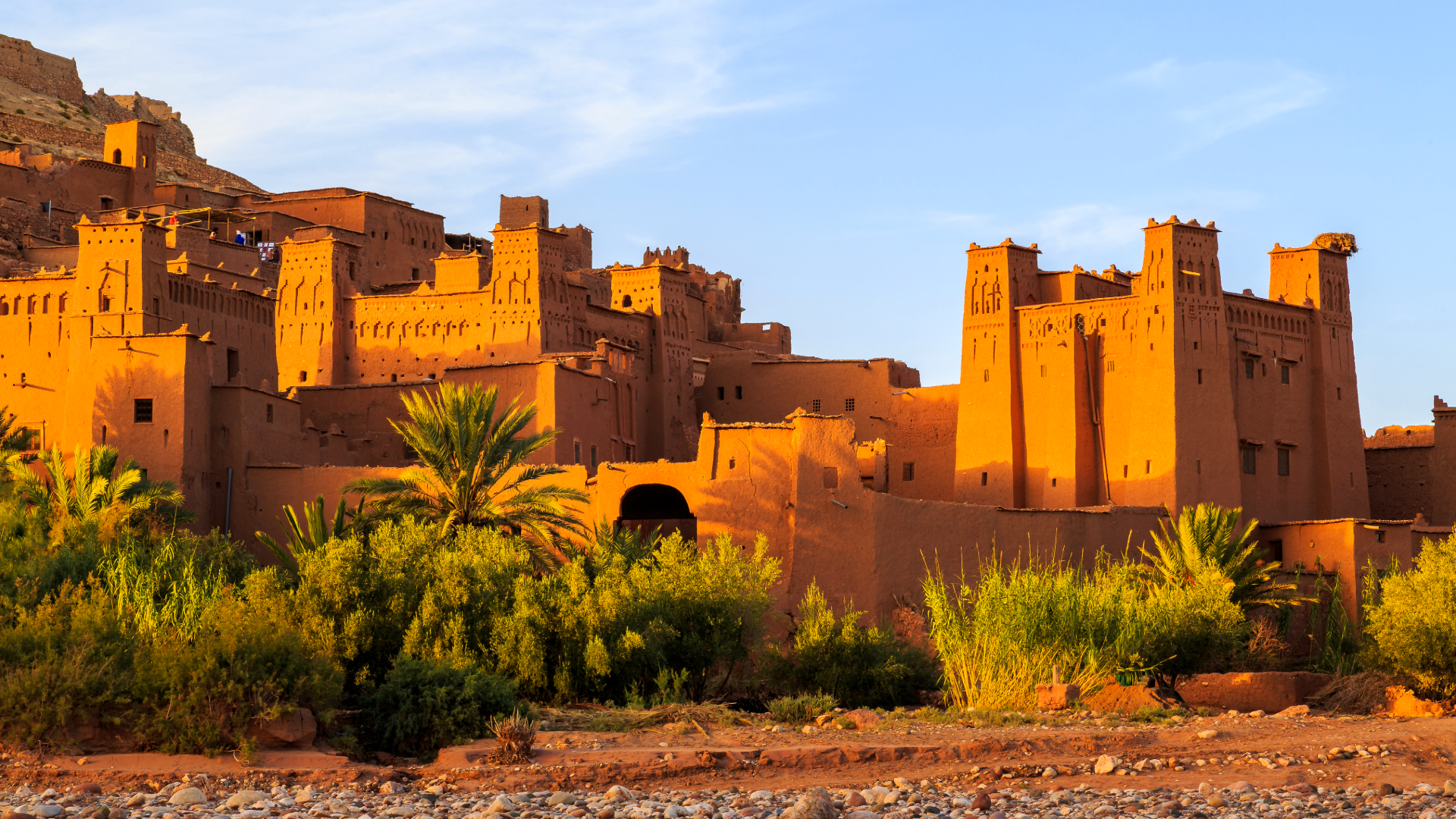
Marrakech read through rabbit tagine, a coffee stop and an evening spent among the food stalls of Jemaa el-Fna as they light up for the night.
Marrakech is read here through what is prepared and eaten rather than through a checklist of monuments. Rabbit tagine is one of the city's less obvious dishes, worth seeking out specifically rather than assuming it will appear on every menu.
By evening, Jemaa el-Fna finds its nightly rhythm. Merguez, shawarma and harira move through the stalls as the square fills, the food itself becoming the reason to be there rather than an accompaniment to watching it.
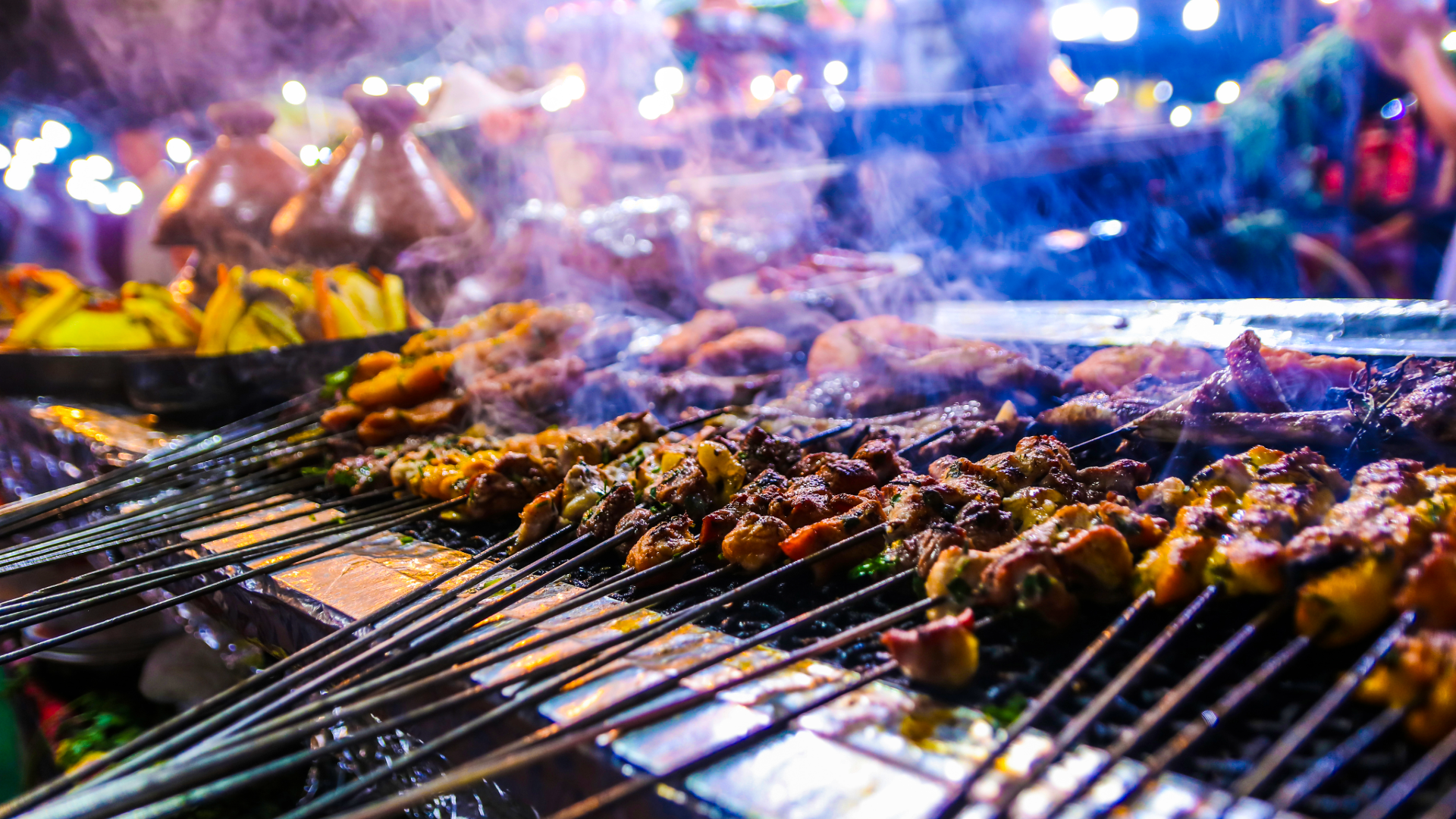
A day trip to the High Atlas for a mountain walk and a family-hosted meal, returning to Marrakech.
A day trip carries you into the High Atlas — a mountain walk, and where confirmed, a meal shared inside a local household, homemade-syrup drinks with alcohol-free alternatives available.
The day returns to Marrakech by evening.
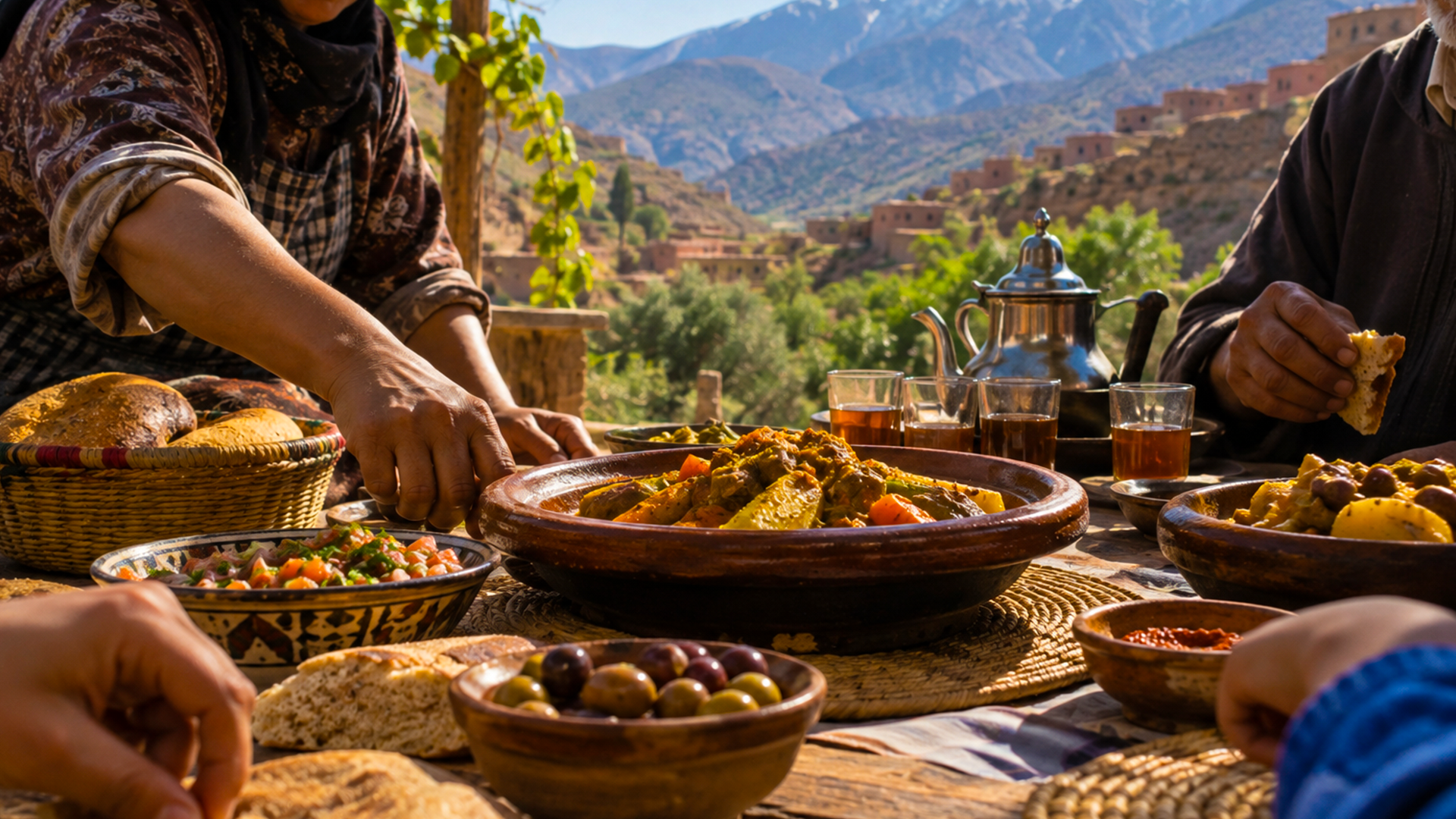
Where stone gives way to salt air.
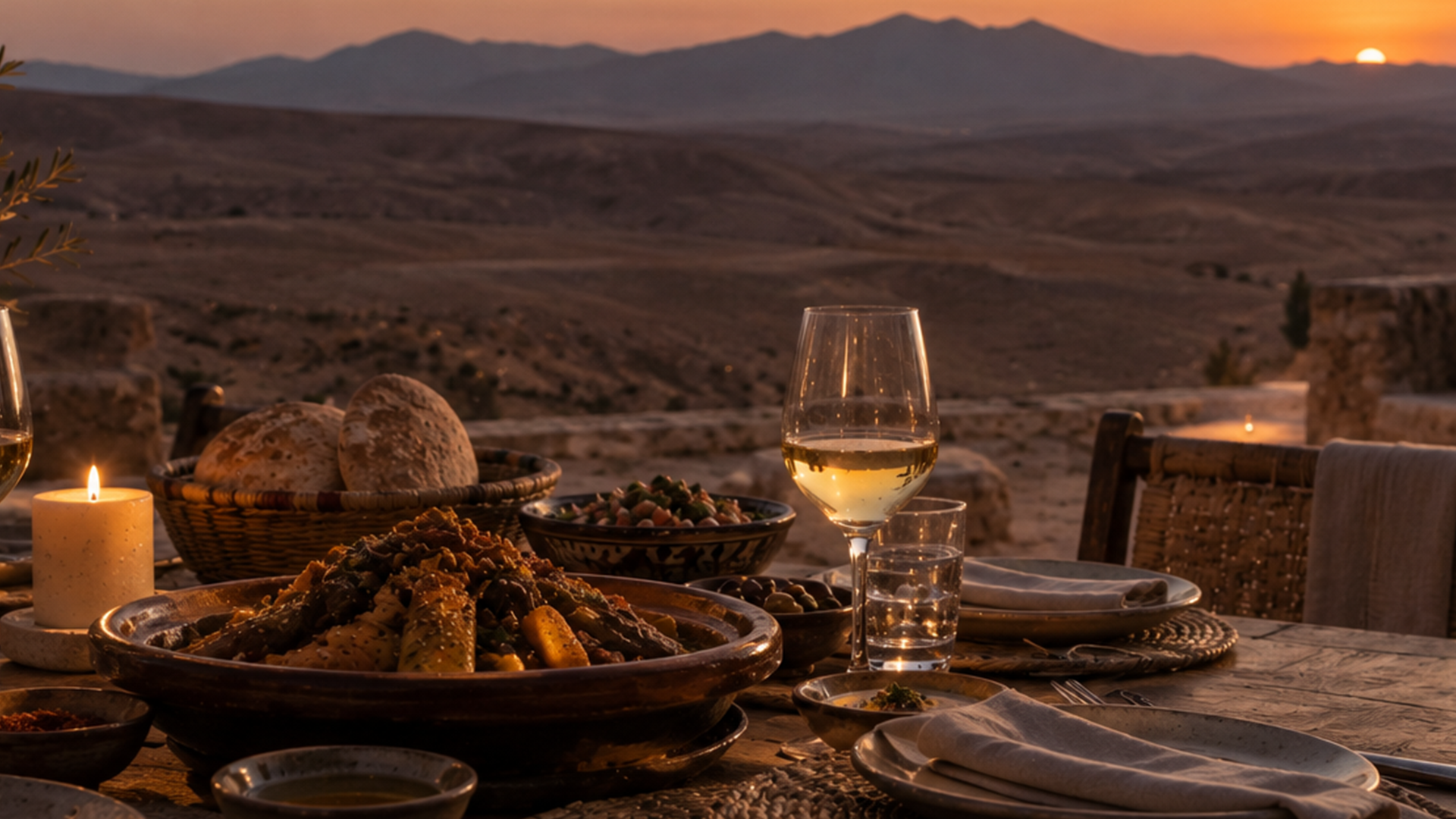
A weather-permitting balloon experience and a candlelit dinner in the stone desert of Agafay.
Where weather allows, the morning opens with a balloon experience over the rocky Agafay plateau — conditions permitting, not a guaranteed start to the day.
A lunch amid the stone landscape follows, with a camel experience where confirmed, closing with a candlelit dinner beneath the open sky. Agafay is a stone desert, distinct from the Sahara crossed earlier in the journey.
Essaouira's medina and ramparts, closing with a seafood-led meal by the Atlantic.
The road reaches the Atlantic at Essaouira, its medina and sea-facing ramparts a different register entirely from the stone desert left behind.
The table turns fully to the sea: oysters or sardines where fresh, seasonal and suitable, alongside msemen, harira, almond biscuits and amlou where available. Onward arrangements from Essaouira remain flexible.
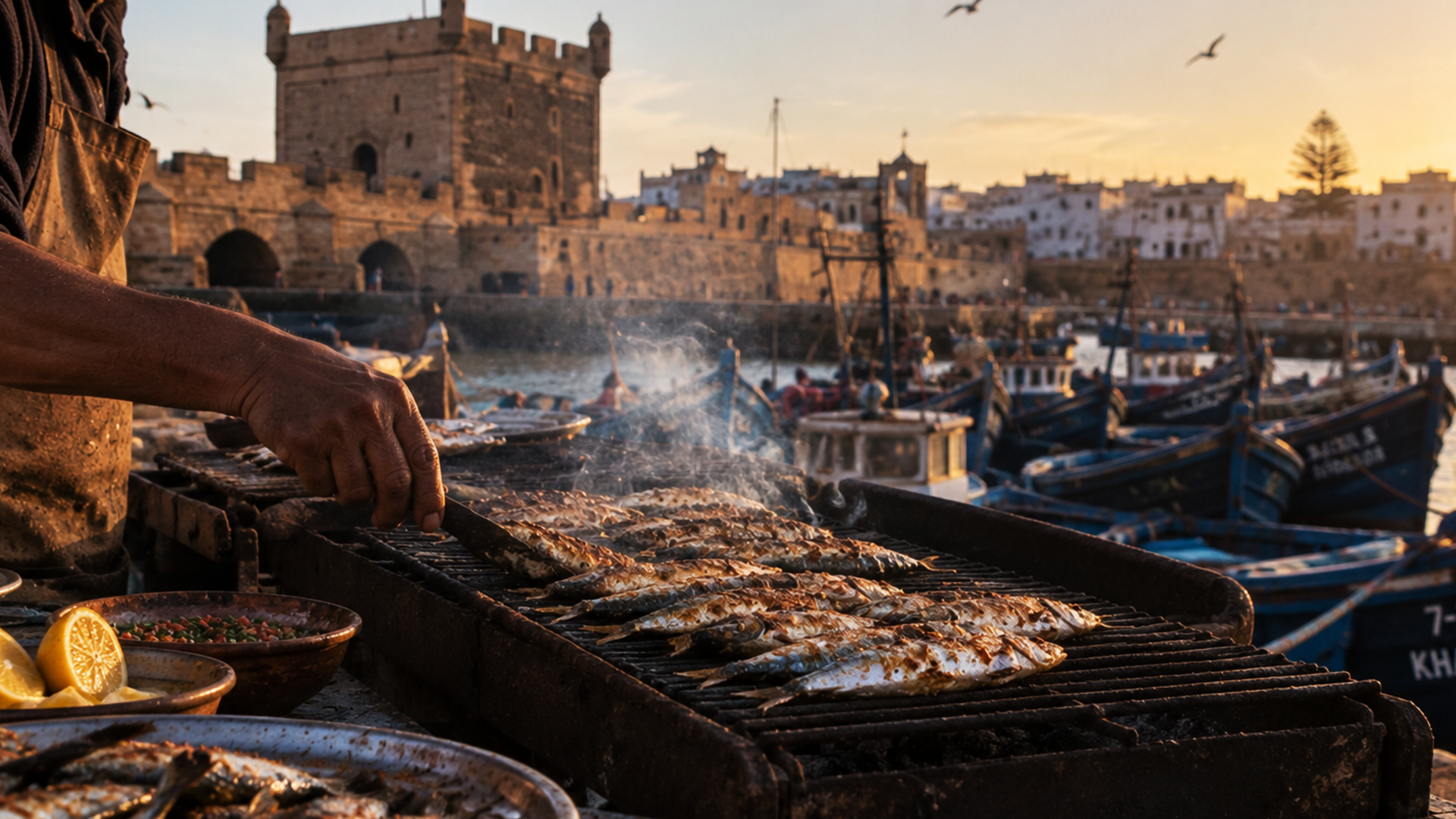
What stays with you is rarely one single meal. It is the accumulation of small moments: a market vendor's voice, steam rising from a Fes kitchen, bread baked over desert fire, an afternoon in a mountain kitchen, and finally, the salt air of the Atlantic in Essaouira.
Thirteen days is enough to taste how the country changes from coast to desert and back again.