
9 days through the artists, materials and traditions that continue to shape Morocco.
The days below show how this journey is intended to flow. Each one can be adjusted once we start planning together.
Where modern Morocco meets its oldest crafts.
A contemporary gallery in Casablanca sets the tone before the road turns toward Fes and its living craft traditions.
A private chauffeur meets you on arrival in Casablanca, and the day opens with a moment of contemporary reflection at a loft gallery showing emerging Moroccan artists: a different first impression than the usual monument-led welcome.
After lunch, the road turns inland toward Fes, arriving as the city's oldest medina settles into evening.
A day inside Fes's craft traditions: a zellij or pottery workshop, and an introduction to Islamic geometry and brass engraving.
Fes is entered on foot, through a medina where the same trades have occupied the same doorways for generations: tanneries, leatherwork, metal.
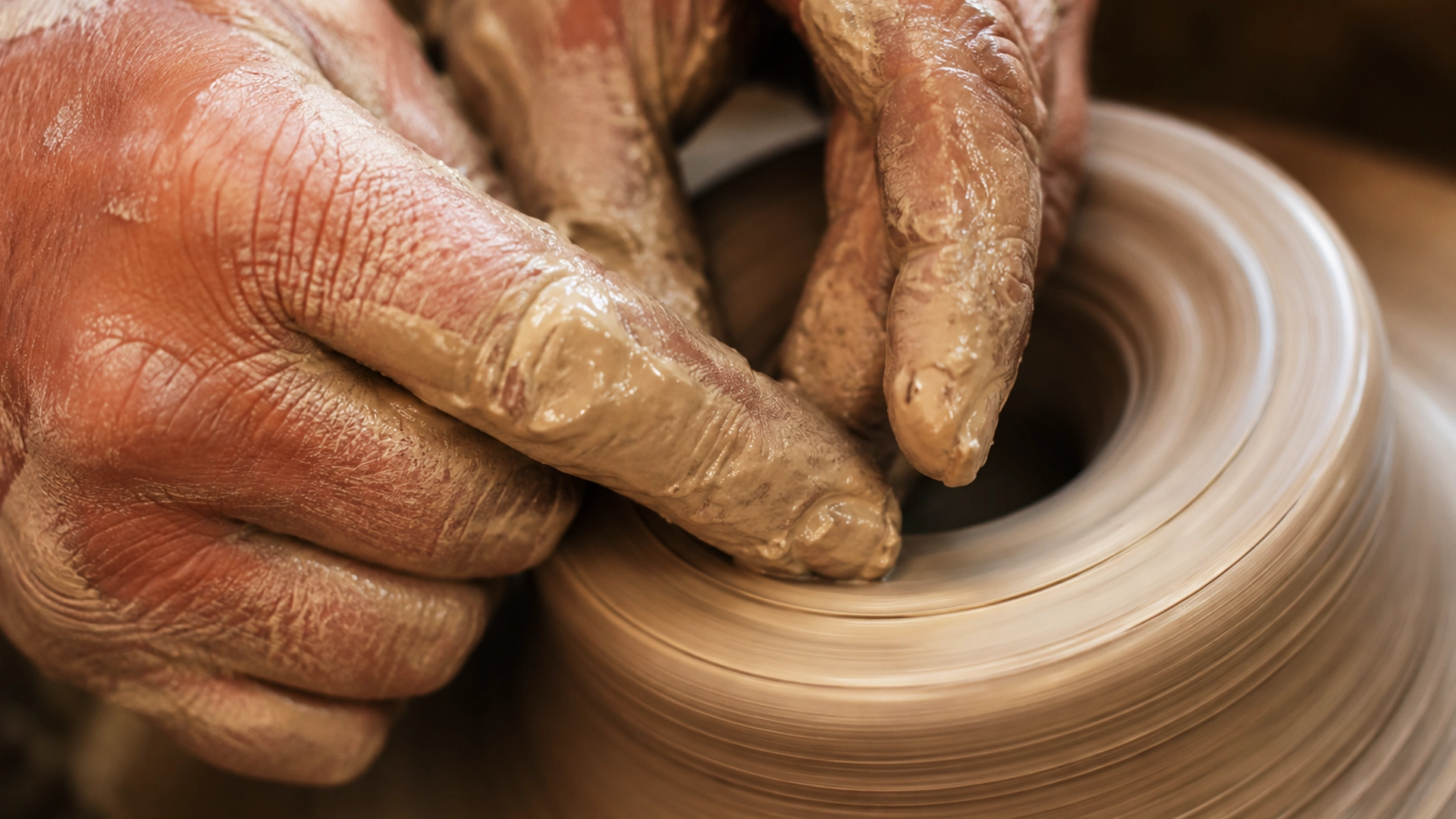
The day turns hands-on with a zellij or pottery workshop, followed by an introduction to Islamic geometry and brass engraving, two disciplines that shape much of what you'll see for the rest of the day.
Where heritage and design meet.
Fes gives way to Marrakech: an orientation walk through the Bahia Palace and the ruins of El Badi Palace.
The road south trades Fes's density for Marrakech's particular energy: a city that holds centuries of architecture alongside a genuinely contemporary design scene.
An orientation walk takes in the Bahia Palace and the ruins of El Badi Palace, two very different registers of the same royal history.
Majorelle Garden, the Yves Saint Laurent Museum, and a glass-blowing demonstration at Beldi Verre.
Majorelle Garden and the Yves Saint Laurent Museum open the day: cobalt walls and a collection that places Moroccan craft alongside international design.
The afternoon continues at Beldi Verre, one of the last traditional glass-blowing workshops in the country, watching tea glasses take shape from molten glass in real time.
A countryside horse ride and a visit to a weaving house, before returning to Marrakech.
The day moves beyond Marrakech's walls into the surrounding countryside: a horse ride through open terrain, a different pace entirely from the medina.
A visit to a women-run weaving house follows, an introduction to the textile techniques and patterns that define much of Morocco's woven craft, before the return to Marrakech.
A freer, coastal expression.
Marrakech gives way to Essaouira's old town and its thuya-wood marquetry workshops.
The road west trades Marrakech's density for Atlantic air, arriving in Essaouira's old town: a smaller, quieter register of Moroccan craft.
The afternoon turns toward thuya-wood marquetry, a technique specific to this stretch of coast, watched in the workshops where it's still practised.
Essaouira's sea-facing ramparts by day, live music carrying through the town by evening.
Essaouira's identity is bound to the sea: the day takes in the historic ramparts and sea fortress before continuing through further creative corners of the town.
The evening often turns musical, with live performance carrying through the town's courtyards after dark.
Where the journey quietly resolves.
A short journey to Sidi Kaouki's quieter coast, with a hammam at the stay to close the day.
The road south from Essaouira is short, arriving in Sidi Kaouki, a quieter, more bohemian stretch of coast, its rhythm set by surf cafés and open beach.
The afternoon has little on it beyond rest: a hammam at the stay, if wanted, and the particular stillness this coastline is known for.
The Amazigh Heritage Museum and a silver jewellery workshop close the journey in Agadir.
The final leg carries you to Agadir, where the Amazigh Heritage Museum offers a proper introduction to the region's symbolism and material culture before the journey's closing craft experience.
A silver jewellery workshop closes the creative thread that has run through the whole journey: a chance to make something rather than only watch it made, before onward arrangements from Agadir.
The journey begins in Casablanca, where contemporary galleries introduce modern Morocco before Fes reveals the depth of its historic craft traditions. In Marrakech, heritage and innovation meet through gardens, fashion, glassmaking, galleries and design-led spaces. Essaouira brings a freer coastal rhythm shaped by musicians, woodworkers and artists, while Sidi Kaouki offers a quiet pause beside the Atlantic. The final chapter in Agadir celebrates Amazigh heritage through jewellery, symbolism and hands-on creation.